Can you CNC machine plastic and still hit aerospace tolerances? Modern plastic CNC machining proves you can—if you pick the right machinable plastic. This technology is vital for complex parts. Plastic is now a top-tier material for many parts you design.
To ensure your project works perfectly, knowing which one to choose is the most important first step. This guide will show you why engineers are choosing plastics. You’ll learn about top-performing grades and discover essential techniques for CNC machining plastic successfully.
Why Use Plastic for CNC Machining
Choosing CNC plastic brings many benefits to your projects. You will quickly see why engineers love these strong, light materials.
Weight & Cost Advantage
Plastic is markedly lighter than aluminum—its lower density is a big plus. This lightness trims both freight costs and spindle wear on the machine. This advantage sharply drops the part cost in high-volume plastic CNC machining runs, saving you money.
Stock-shape Availability
Rod, plate, and near-net cast blanks in common materials like ABS, POM, or PET sit on most distributors’ shelves. This excellent availability is key. It erases long milling waits for custom CNC plastic parts, speeding up your production time significantly.
Chemical & Corrosion Immunity
Materials like PTFE and PEI need no extra coating to shrug off aggressive pH environments. They naturally resist harsh chemicals, which means CNC machining plastic parts for lab or medical hardware happens much faster and cheaper. You get great durability right away.
Design Freedom Without Post-processing
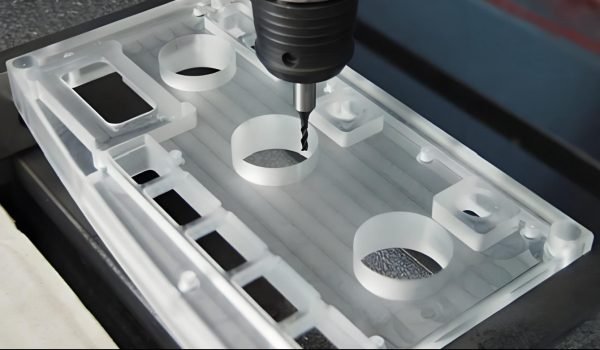
Transparent materials such as PC or PMMA can be diamond-polished straight from the machine. There is no need for time-consuming blasting or anodizing. This direct-to-finish ability is perfect for creating light pipes or clear covers in CNC plastic machining with less effort.
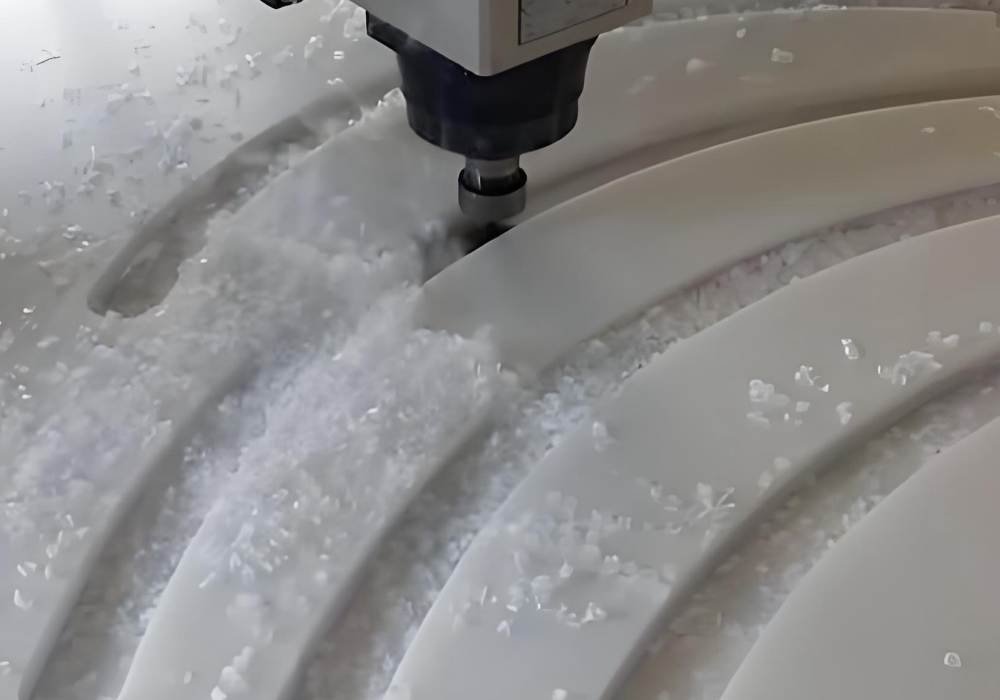
Types of CNC Plastics & Their Applications
There is a perfect plastic for every design challenge you face. Let’s look closely at the unique traits and common uses for the top materials.
ABS – The Prototype Workhorse
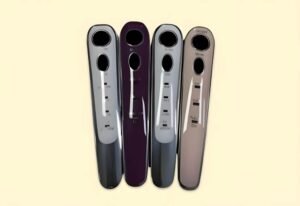
ABS is a top choice for making prototypes and general parts. It’s really tough and super easy to glue or paint. You’ll often find ABS used for things like housings for your handheld devices or durable mounts for drone cameras. It’s great for ergonomic models as well.
This material is a favorite because it machines quickly and is very reliable to work with. You get a naturally smooth surface finish without much effort. Besides, ABS is an ideal, budget-friendly plastic for fast testing of a design’s form before you choose the final production material.
Nylon (PA6 & PA66) – Bearing-grade Choice
Nylon is famed for its excellent wear resistance and self-lubricating properties. For best results, precondition the stock or machine to be dry for tighter repeatability on dimensions. This is crucial because Nylon can absorb moisture.
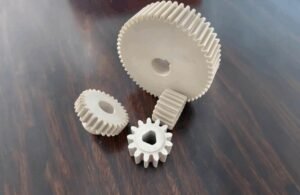
You will find Nylon in parts like conveyor star wheels and low-load gears because of its durable nature. It’s also often used for creating complex cable-tie mould prototypes. Nylon provides a great balance of strength and slickness for moving parts.
POM (Delrin) – Low-friction Champion
POM (often known by the brand name Delrin) is a champion of low-friction applications. A useful machining tip is to keep rake angles near zero to stop built-up edge from forming. Parts made from POM often run lube-free due to its natural slickness.
Common applications for this material include small mechanical parts. Think of cassette rollers, the ratchets in insulin pens, and timing pulleys. POM’s excellent dimensional stability and low friction make it ideal for precision mechanisms.
Polycarbonate (PC) – Optical Toughness
Polycarbonate (PC) offers a unique combination of optical clarity and extreme toughness. It is highly impact-safe. To fix surface scratches and achieve windshield clarity, you can post-coat it with a silica sol-gel. This enhances its visual appeal.
PC is the top choice for safety-glass inserts and durable LED diffusers. It is also used for strong drone gimbal guards that need to resist impact. Its resilience makes it suitable for parts where clarity and resistance to breaking are both essential.
PMMA (Acrylic) – Glass Substitute
PMMA (Acrylic) is known for being an excellent glass substitute, cutting with a glassy, polished surface. When machining, use a single-flute O-flute upshear to stop chip-weld on thin walls. This keeps the edges crisp and clean.
Its clarity and finish make it popular for retail display blocks and microfluidic lids. PMMA is also used for lens prototypes where precise optical surfaces are needed. It’s an easy-to-polish plastic for machining, saving time on finishing.
PET / PET-P – Precision Slides
PET / PET-P is valued for its ability to hold tight tolerances, especially on long rails and slides. It has minimal warp, which is critical for precision movement. This makes it a great choice for parts that require high positional accuracy over length.
Key uses include food-sorting shoes and pneumatic spools that demand repeatable motion. It is also found in measurement jigs where stability is paramount. PET is a reliable material when dimensional control is your main priority.
PEEK – Metal Replacement
PEEK is a high-performance plastic often used as a direct metal replacement because of its strength and thermal limits. It has a high continuous operating temperature rating. Be sure to machine it dry to avoid any risk of hydrolysis, which can degrade the material.
Applications for PEEK include high-stress, high-temperature environments. You’ll find it in surgical handles, satellite stand-offs, and high-heat electrical sockets. PEEK’s combination of toughness and heat resistance is hard to beat.
PTFE – Ultimate Chemical Shield
PTFE (you might know it as Teflon) is the ultimate shield against chemicals due to its incredible non-stick properties. Since this plastic is very soft, you must properly support the material. Use a low-melt alloy or a freeze-gel for machining to get crisp edges and a clean final surface finish.
PTFE is primarily used for parts that require total chemical inertness. These include gaskets, valve seats, and lab fittings that encounter aggressive chemicals. Its non-reactive surface is a massive advantage in demanding environments.
PEI (Ultem) – High-heat Electrical
PEI (Ultem) is a sturdy, high-heat material that has proven to be beneficial around electrical devices in several ways. It has a low Coefficient of Thermal Expansion (CTE), which means its bores remain round (while in a broad range of thermal swings) and exhibit relatively stable mechanical properties with large variations in temperature.
You’ll find PEI in critical components like 5G antenna mounts, autoclave trays that require high heat resistance, and burn-in test sockets. Its strength and stiffness at elevated temperatures make it indispensable for demanding technical hardware.
PP & HDPE – Economical Chemical Tanks
PP (Polypropylene) and HDPE (High-Density Polyethylene) are the economical choice for applications needing chemical safety. Chip control is mandatory when machining these; use an air-blast because the chips easily string and will wrap around your tools if you leave them alone.
These materials are typically used for large, low-cost parts like battery crates and dairy filler nozzles. They are also commonly for tank internals due to their excellent resistance to many common industrial fluids and chemicals.
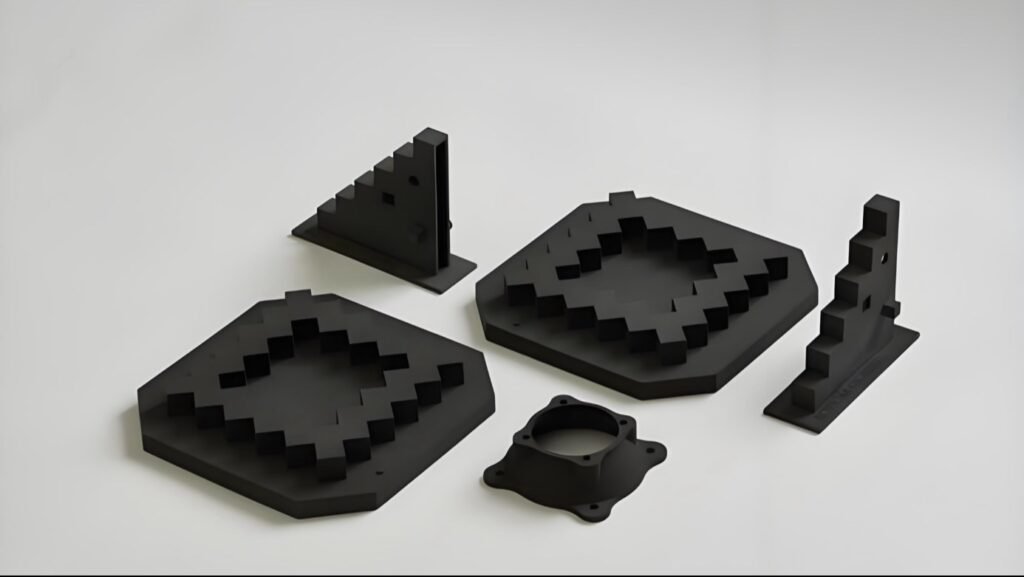
A Quick View of the Plastic Machinability Chart for Informed Decisions
Check this quick chart to compare the top materials’ strengths and watch-outs.
| CNC Plastic | Machinability | Key Strengths | Typical Watch-outs |
| ABS | Excellent | Easy cut, smooth finish, bonds well | Can heat-up if feeds too slow |
| PC | Fair-Good | Tough, see-through, impact safe | Micro-cracks near sharp corners |
| PMMA | Excellent | Cuts glassy, polishes fast | Brittle—chip exit must be clear |
| POM | Excellent | Low friction, size stable | Avoid thin unsupported walls |
| Nylon | Fair-Good | Wear resistant, self-lube | Moisture swell—store dry |
| PET | Good | Tight tolerance rails | May warp if the coolant uneven |
| PEEK | Fair | High temp, strong | Tool wear climbs—use DLC |
| PEI | Fair-Poor | Stiff, heat-proof | Expensive, needs rigid set-up |
| PTFE | Excellent | Non-stick, chem-proof | Soft—support well or flutter |
| PP / HDPE | Excellent | Cheap, chemical safe | Chips string—vacuum a must |
CNC Plastics Selection: Key Factors to Consider
Selecting the best plastic goes beyond the basics. Think about where your part will actually be used. Here are the seven main things you must consider.
Mechanical Load & Wear
You need to match the material’s tensile strength and creep data to the service load you intend for it. Always add a little safety margin to your calculations. This margin helps account for long-term strain, ensuring the part doesn’t fail over time in your plastic CNC machining application. If the part is going to be subjected to sliding or rubbing motion, wear resistance will be important, and a self-lubricating plastic will perform better and last longer.
Thermal Environment
If your part gets continuously hot, many common plastics with low Heat Deflection Temperatures (HDT) are immediately ruled out. You need to move up to materials like PC, PEEK, or PEI for reliable function near a heat source. High heat can also cause internal stress, leading to part warping. Always confirm the highest temperature the material can handle.
Chemical & Sterilisation Exposure
The environment your part operates in is a major factor. Steam, EtO, or gamma radiation used for sterilization will knock out certain resins entirely. You must ensure chemical and sterilization compatibility before quoting any CNC plastic components for laboratory or medical use. Harsh chemicals or industrial solvents can bring about degradation of the surface of plastic. When the working environment is severe or harsh, materials like PTFE are best for wear resistance.
Dimensional Stability & Moisture
There are a few hydrophilic plastics available for your part, where the plastic absorbs water and then swells or changes dimensionally. If your part requires extremely tight-joint duties, you can either machine a bone-dry grade of moisture-absorbing plastic or utilize a more stable stock (POM, PEEK). Additionally, all moisture absorption affects mechanical properties, and a wet plastic could be less stiff than in a bone-dry state.
Regulatory & Food Contact
If the part you are CNC plastic machining will be in contact with food, drink, or in a medical application, compliance is mandatory. FDA, EU 10/2011, and USP Class VI lists favor materials such as PET, PP, and PEI. These standards ensure the material is safe and non-toxic. You should always request complete lot-trace paperwork and compliance certificates from your manufacturing partner.
Budget & Lead-time
The cost and time required to get the material impact your project timeline. Generic stock, like standard ABS, typically ships overnight from a distributor and is very economical. On the other hand, speciality-filled grades, which might contain glass fibers, may need several weeks to be sourced. You must balance the required material performance against your market speed.
Surface Finish & Decoration
The final look and feel of your part should influence your plastic selection upfront. Clear grades, such as PC or PMMA, will need a meticulous diamond burnish or multi-stage polishing to achieve true transparency. A textured material like opaque ABS accepts pad-printing or paint decoration on the same day it’s machined. Always decide on the finish before your CAM programming starts.
CNC Machining Techniques for Plastic Parts
Having the right material is just the start of your journey. You need specific techniques to machine plastic perfectly. Let’s talk about the best methods now.
Tooling Choices
The geometry of your cutting tools is key to successful plastic CNC machining. You need near-zero rake angles and high clearance angles. This specific part geometry will reduce rubbing friction and allow the plastic to cut rather than deform or melt. When working with abrasive stock, for example, glass or glass-filled Nylon, a Diamond-Like Carbon (DLC) coating on tooling is very necessary. This coating significantly extends the tool life.
Optimising Speeds & Feeds
To prevent plastic from melting or warping, you need to use high feed rates alongside moderate spindle RPM. This combination is highly effective. It is designed to keep the heat generated by the cutting action moving into the chip material, which is then quickly removed, rather than transferring heat into the final part. High chip load minimizes the tool’s contact time with the workpiece.
Work-holding Without Warp
Surface dents or warping occur very easily under general clamping, especially for softer materials like Nylon. A vacuum chuck, with a friction pad, is a good option. This diverts the clamping weight to a much larger surface area, and it works well to avoid deformity or denting. If the part is uniquely shaped, soft jaws that are custom-machined can mimic the part’s contour and copy the contour for the clamp.
Coolant vs Air Blast
The majority of plastic materials should be machined dry to avoid dimensional issues or chemical reactions with the coolant. However, an air blast is highly recommended. It serves to clear the chips and remove heat, keeping the cutting area clean and cool. For amorphous grades of plastic, a light mist coolant can be introduced. This mist stops ‘chip-weld’ from occurring and lubricates the cutting edge.
Post-machining Stress Relief
CNC machining can introduce residual stresses into plastic parts due to the heat and cutting forces. A gentle, controlled thermal anneal process post-machining is often beneficial. This process lowers the internal stresses and reduces the part’s notch sensitivity. Stress relief is particularly important before any secondary operations, such as welding or solvent bonding. A stress-relieved part will be much more stable.
Conclusion
Proper CNC plastics selection is essentially a balance of strength, heat, and cost. When the right plastic material and machining methods are aligned, your final product will be accurate, repeatable, and ultimately prepared for any demanding applications.
Fecision offers CNC plastic machining services for challenging materials, such as PEEK and Ultem. Our ISO-certified processes ensure you get tight tolerances and excellent finishes on your parts. We handle material selection, offer design for manufacturability (DFM) support, and use advanced CMM inspection, giving you confidence that your selected plastic performs exactly as needed.
Don’t leave your tight tolerances to chance. Start your precision CNC plastics project with Fecision now!