When it comes to advanced manufacturing, producing parts with intricate geometries and high precision is a significant challenge. Did you know that nearly 70% of manufacturers rely on CNC machining to produce complex components that require exceptional accuracy and detail? This reliance on CNC machining underscores its importance in modern manufacturing.
As you explore CNC machining, understanding the techniques and best practices for producing complex parts is crucial. This article will intrdouce the factors to consider for manufacturing complex parts through CNC machining.
Understanding Complex Parts in Manufacturing
Complex parts are a staple in various industries, from aerospace to medical devices, and their production requires a nuanced understanding of machining processes.
What Defines a Complex Part?
A complex part in manufacturing is characterized by its intricate geometries, tight tolerances, and multiple features. These characteristics make complex parts challenging to produce using standard manufacturing processes. The definition of complexity in machining often includes parts that require multiple setups, have small or intricate features, or possess 3D contoured surfaces. When machining parts with tight tolerances, an accurate machine is necessary to stay within the specified tolerance range.
Complex parts often demand specialized fixturing, advanced programming techniques, and careful process planning to ensure that all features are machined correctly and efficiently. The complexity of a part is not just about its design but also about the manufacturing process required to produce it.
Common Challenges in Manufacturing Complex Components
Manufacturing complex components comes with several challenges, including tool access limitations, maintaining dimensional stability throughout multiple operations, achieving consistent surface finishes, and managing material behavior during machining. When producing complex parts, manufacturers must use highly accurate machines capable of maintaining precision throughout the entire manufacturing process.
Why Choose CNC Machining for Complex Parts
When it comes to manufacturing complex parts, CNC machining stands out as a superior choice due to its advanced capabilities. This method is particularly beneficial for industries that require complex geometries and precise specifications.
Precision and Accuracy Advantages
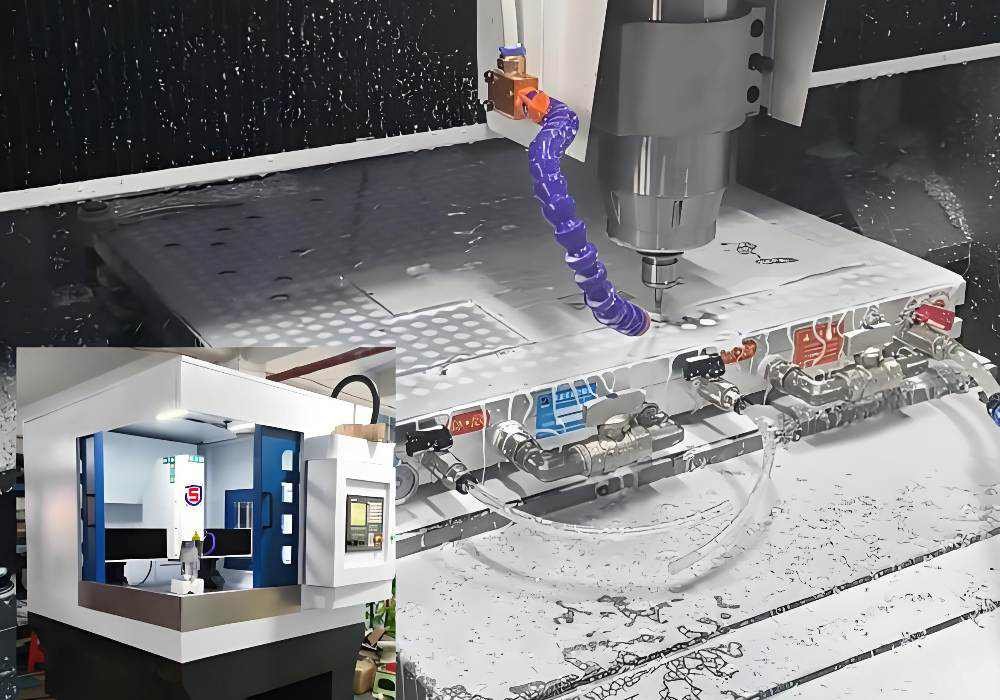
CNC machining offers unparalleled precision and accuracy advantages for complex parts. Typical tolerances of ±0.1mm are standard, with capabilities reaching ±0.02mm for critical features. This ensures consistent quality across production runs, making it ideal for industries where precision is paramount.
Material Versatility
The material versatility of CNC machining allows manufacturers to work with a wide range of materials, from common metals like aluminum and steel to specialized alloys, plastics, composites, and exotic materials like titanium or Inconel. This flexibility makes CNC machining suitable for various industries, including aerospace, medical, and electronics.
Cost-Effectiveness for Intricate Designs
Despite the initial perception of high costs, CNC machining often proves cost-effective for intricate designs. By reducing assembly requirements, minimizing material waste, and eliminating the need for expensive tooling associated with other manufacturing methods, CNC machining can save you time and money.
In conclusion, CNC machining’s advanced capabilities, precision, material versatility, and cost-effectiveness make it an ideal choice for manufacturing complex parts. Whether you’re producing turbine blades for aerospace or custom orthopedic implants for the medical field, CNC machining can deliver the precision and efficiency you need.
Essential CNC Machining Techniques for Complex Parts
To manufacture complex parts effectively, manufacturers often employ a variety of CNC machining techniques. These techniques are crucial for producing components with intricate designs and high precision. The choice of technique depends on the specific requirements of the part, including its geometry, material, and tolerance specifications.
CNC Turning for Complex Components
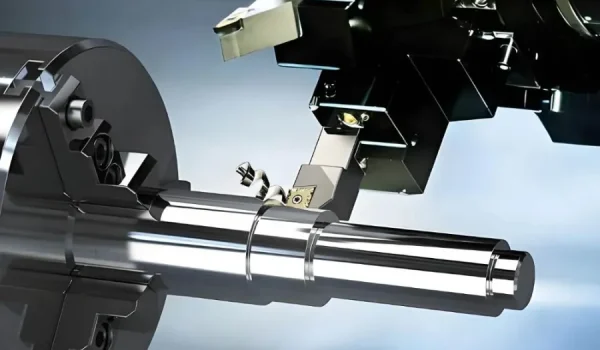
CNC turning excels at creating complex cylindrical components. It uses specialized cutting tools that move along the X and Z axes while the workpiece rotates at high speeds. This technique is ideal for producing parts with features like tapers, contours, threads, and undercuts. The precision offered by CNC turning makes it a preferred method for manufacturing complex rotational parts.
CNC Milling Capabilities
Modern CNC milling capabilities allow for the creation of complex 3D geometries. This is achieved through the precise removal of material using rotating cutting tools. Multi-axis CNC milling machines can approach the workpiece from various angles, enabling the production of intricate designs. This versatility makes CNC milling a vital technique for complex part manufacturing.
Turn-Mill Combination Processes
Turn-mill combination processes integrate both turning and milling operations in a single setup. This advanced technique reduces handling time and improves accuracy for complex parts that require both rotational and prismatic features. By combining turning and milling, manufacturers can produce complex components with diverse geometries efficiently.
Electrical Discharge Machining (EDM) Applications
EDM applications provide solutions for creating extremely precise features in hard materials. Through controlled electrical discharges, EDM can produce intricate internal geometries or sharp corners. This technique is particularly useful for complex components that are challenging to machine using traditional methods. EDM’s precision and capability to work with hard materials make it an essential technique in complex part manufacturing.
5-Axis CNC Machining for Complex Parts
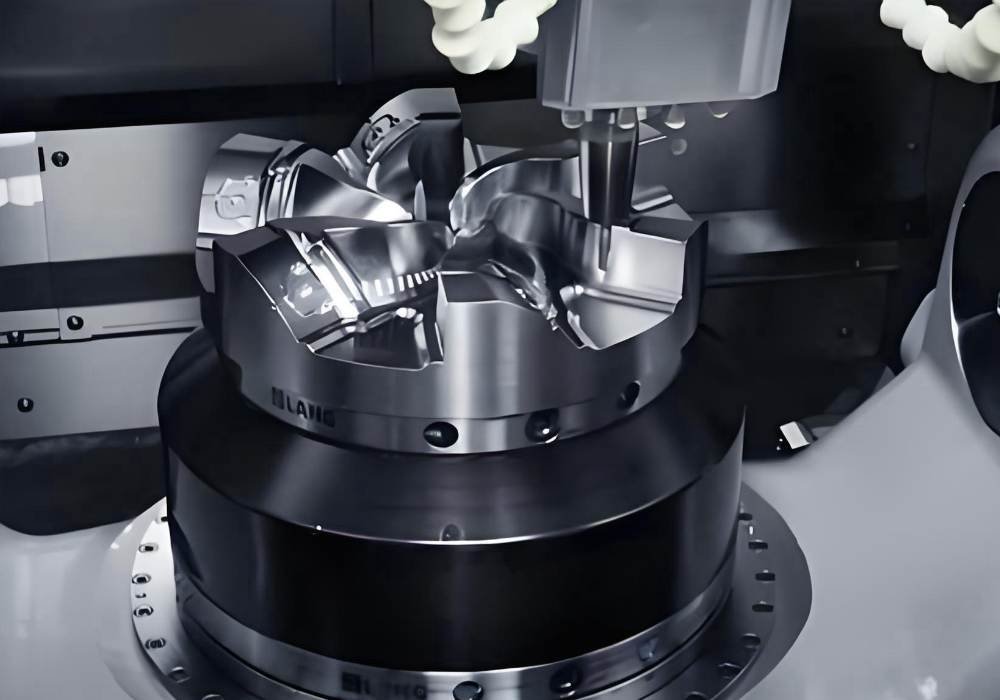
Advanced CNC machining capabilities, particularly 5-axis technology, are transforming the way complex parts are manufactured. This technology allows for the production of intricate components with high precision and efficiency.
How 5-Axis Technology Works
5-axis CNC machining technology works by adding two rotational axes to the traditional three linear axes (X, Y, and Z), enabling the cutting tool or workpiece to approach the material from virtually any angle. This results in superior surface finishes and the ability to machine complex geometries in a single setup.
Advantages Over 3-Axis Machining
The primary advantages of 5-axis machining over traditional 3-axis machining include reduced setup time, improved surface finish, and better tool life. Additionally, 5-axis CNC machines can create complex undercuts and features that would be impossible with 3-axis machines, enhancing overall machining capabilities.
Ideal Applications for 5-Axis Machining
5-axis CNC machines excel at producing parts with compound curves, deep cavities, and features on multiple faces. This makes them ideal for aerospace components, medical implants, mold and die manufacturing, and automotive parts. The technology’s ability to machine complex geometries in a single setup reduces production time and improves part quality.
Complex CNC Machining: Design Considerations
To get the most out of CNC machining, it’s essential to consider design factors that impact manufacturability. By following design-for-manufacturing (DFM) principles, you can optimize your designs and take full advantage of CNC machining’s capabilities.
Designing for Manufacturability
Designing for manufacturability is a critical approach that considers the manufacturing process during the design phase. This helps avoid features that are difficult, expensive, or impossible to machine while maintaining the part’s functionality. Effective design for CNC machining includes considerations such as minimizing thin walls, avoiding deep cavities with high depth-to-width ratios, and incorporating appropriate corner radii. By doing so, you can simplify the machining process and reduce production costs.
Material Selection Impact
The choice of material significantly impacts the complexity and cost of machining. Harder materials like titanium or hardened steel increase tool wear and require slower cutting speeds. In contrast, ductile or low-conductivity materials, such as stainless steel, demand specialized strategies for chip removal and heat management. Selecting the right material for your part is crucial to balancing performance requirements with manufacturing efficiency.
Tolerance Requirements for Complex Features
Understanding tolerance requirements for complex features is essential to avoid unnecessarily tight tolerances across an entire part. Applying tight tolerances (±0.01mm) only to critical features while using standard tolerances for non-functional areas can dramatically reduce machining time and cost. Collaboration between designers and machinists early in the development process can identify potential manufacturing challenges and lead to design optimizations that reduce complexity and cost.
Key Restrictions in CNC Design for Complex Parts
While CNC machining is highly versatile, there are fundamental limitations, particularly concerning tool geometry and tool access, that designers must account for when creating complex parts.
Tool Geometry Limitations
Most common CNC cutting tools have a cylindrical shape and a limited cutting length. This means that internal corners of a CNC part will always have a radius corresponding to the tool diameter, making perfectly sharp internal corners impossible to achieve directly. Designers must consider these tool geometry constraints when creating features.
Tool Access Challenges
Tool access becomes an issue when designing features that cannot be reached directly from above. This may require multi-axis machining capabilities or design modifications to ensure all surfaces can be accessed by the cutting tool. Understanding tool access challenges is vital for manufacturability.
Depth-to-Width Ratio Considerations
When designing deep cavities or holes, the depth-to-width ratio is critical. The recommended maximum depth is typically four times the cavity width to prevent tool deflection, vibration, and chip evacuation problems. This consideration is essential for maintaining the quality of the machined part.
Minimum Feature Size Constraints
Minimum feature size constraints are determined by the smallest available cutting tools, typically 2.5mm diameter for standard machining. Features below this size require specialized micro-machining techniques, increasing cost and complexity. Designers must balance these constraints with the functional requirements of the part.
By understanding and working within these CNC design restrictions, designers can create complex parts that are both functional and manufacturable. It’s about finding creative solutions that accommodate the limitations of the manufacturing process while maintaining performance.
Expert Tips for CNC Machining Complex Parts
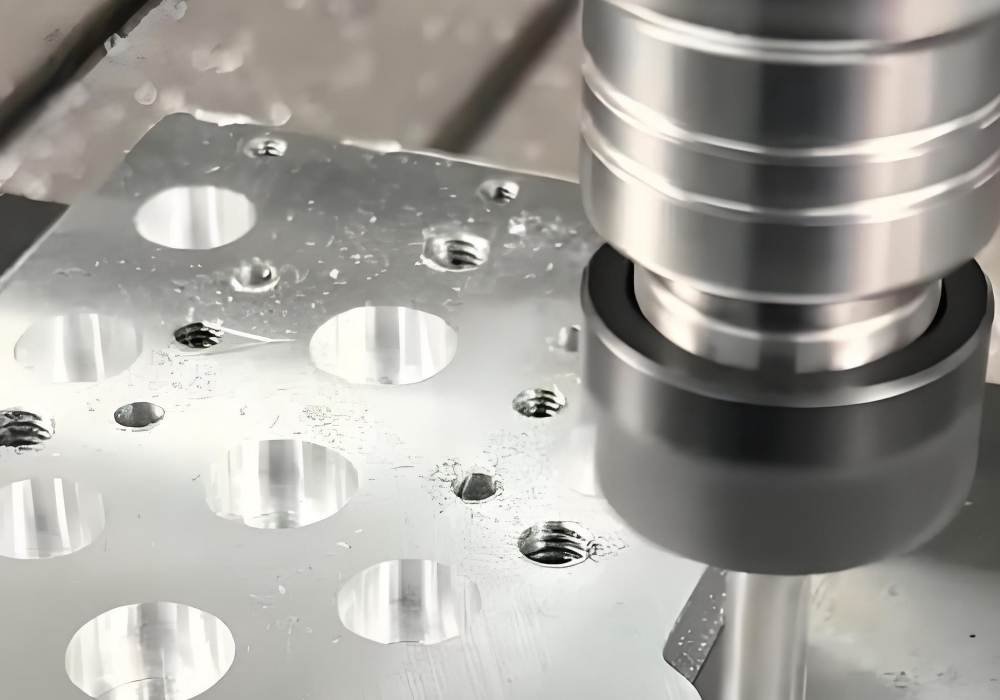
When it comes to CNC machining complex parts, several expert tips can help improve efficiency and accuracy. Machining complex parts requires careful planning, precise execution, and a deep understanding of CNC machining techniques.
Optimizing Setups to Reduce Complexity
Optimizing setups is crucial for complex parts. You can achieve this by using multi-axis machines to reduce the number of setups. Carefully plan the machining sequence to maintain workpiece rigidity. Utilize reference points or probing technology to maintain accuracy across multiple setups.
Effective Workholding Strategies
Effective workholding strategies are vital for complex parts. Consider using custom fixtures that securely hold the workpiece while allowing tool access to all required surfaces. Vacuum tables can be useful for thin parts that might deform under mechanical clamping. Modular workholding systems can be quickly reconfigured for different parts.
Tool Selection for Intricate Features
Tool selection for intricate features requires balancing reach, rigidity, and cutting capability. Consider the tool length-to-diameter ratio, coating types for different materials, and specialized tools for specific features like undercuts or small internal radii.
Surface Finish Considerations
Surface finish considerations are particularly important for complex parts. Pay attention to cutting parameters such as feed rates and speeds. Choose the right tool, including finishing-specific end mills, and appropriate machining strategies like climb milling versus conventional milling. Using new, sharp tools for final finishing passes and implementing proper coolant strategies can also improve surface finish.
Conclusion
Producing complex parts with CNC machining involves a delicate balance of technology, material selection, and manufacturing techniques. Fecision specializes in CNC machining complex parts across various industries, offering comprehensive services from design consultation through production and quality assurance.
Whether you’re developing a prototype or planning for production, Our team of experts can help optimize your design for manufacturability while maintaining precision and quality. Contact Fecision today to discuss your complex part manufacturing needs and discover how our advanced CNC machining capabilities can bring your designs to life with exceptional precision and efficiency.