Both ASA and ABS are popular materials used in 3D printing, known for their strength and durability. However, they have distinct properties that make them suitable for different applications.
Understanding your project’s specific needs is key to making the right choice. In this article, we’ll explore the composition, advantages, and ideal uses of both ASA and ABS filaments, helping you make an informed decision for your next project.
Understanding 3D Printing Filaments
Understanding the different types of 3D printing filaments is essential for achieving the desired print quality and functionality. The rapidly evolving world of 3D printing means that your choice of filament can significantly impact the quality, durability, and utility of printed objects.
The Importance of Filament Selection
Selecting the right 3D printing filament is crucial because it directly affects the print quality, mechanical properties, and the final product’s suitability for its intended application. Different materials offer varying levels of strength, flexibility, and temperature resistance, making some more suitable for specific projects than others. Understanding these properties is key to achieving successful prints.
Common Thermoplastic Materials
Common thermoplastic materials used in 3D printing include PLA, PETG, ABS, and ASA. PLA is a biodegradable material that is easy to print with, while PETG offers a balance between strength and flexibility. ABS and ASA are engineering thermoplastics known for their superior mechanical properties. ABS is widely used for its impact resistance, and ASA is valued for its UV resistance, making it ideal for outdoor applications.
ASA Filament: The UV-Resistant Option
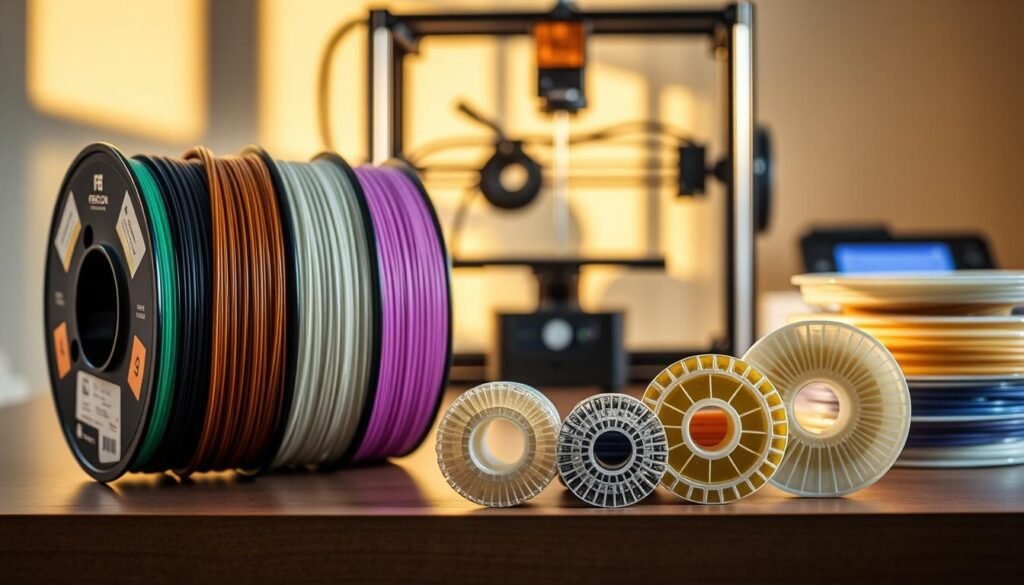
In the realm of 3D printing, ASA filament stands out for its exceptional UV resistance and aesthetic qualities.
What is ASA? Composition and Structure
ASA, or Acrylonitrile Styrene Acrylate, is a thermoplastic material developed as an improvement over ABS, particularly for applications requiring better weather resistance.
It was first introduced by BASF in the early 1970s. The chemical composition of ASA is similar to ABS, with the addition of a grafted acrylic ester elastomer during the copolymerization of styrene and acrylonitrile, which enhances its UV stability.
Key Properties and Characteristics
ASA filament boasts excellent UV resistance, weather resistance, chemical resistance, and temperature resistance.
Its mechanical properties include high impact strength, tensile strength, and dimensional stability, making it superior to many other 3D printing materials.
Advantages of ASA Filament
The advantages of ASA filament include its suitability for outdoor applications, its aesthetic qualities, and its resistance to yellowing and degradation when exposed to sunlight.
These properties make ASA an excellent choice for projects that require durability and visual appeal in harsh environments.
ABS Filament: The Established Standard
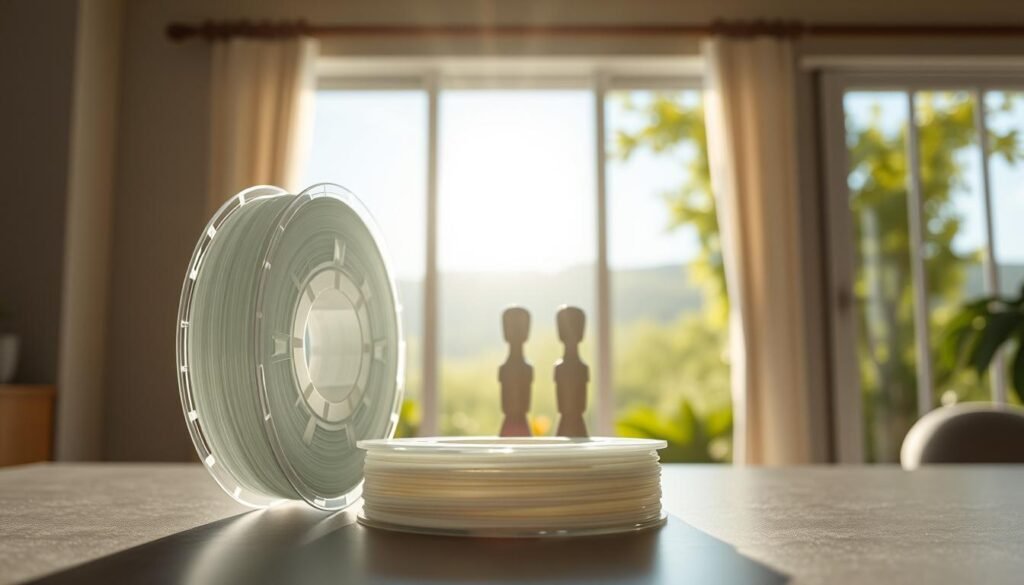
ABS filament has been a cornerstone in 3D printing for decades, offering a unique blend of properties that make it ideal for a wide range of applications. As a widely used thermoplastic filament, ABS is known for its excellent mechanical properties.
What is ABS? Composition and Structure
ABS, or Acrylonitrile Butadiene Styrene, is a thermoplastic material that combines the strength of acrylonitrile, the impact resistance of butadiene, and the ease of processing of styrene. This blend gives ABS its unique properties, making it suitable for various industrial and hobbyist applications.
Key Properties and Characteristics
ABS filament is renowned for its good impact strength, abrasion resistance, and chemical resistance. It offers a good balance between rigidity and impact resistance, making it a versatile material for 3D printing. The properties of ABS include high strength, durability, and temperature tolerance.
Advantages of ABS Filament
The advantages of using ABS filament include its affordability, wide availability, ease of post-processing, and suitability for creating functional parts. ABS is also known for its ability to be glued, painted, or otherwise post-processed, making it a favorite among makers and engineers.
ASA vs ABS: Key Differences
The main distinctions between ASA and ABS lie in their resistance properties, printing requirements, and cost.
UV and Weather Resistance
One of the significant differences between ASA and ABS is their UV resistance. ABS is susceptible to UV degradation, becoming brittle and yellow over time. In contrast, ASA is highly UV resistant, making it ideal for outdoor applications where exposure to sunlight is a concern.
Temperature Resistance and Printing Requirements
ASA has a slightly higher heat deflection temperature (around 86°C) compared to ABS (around 81°C). This difference affects their suitability for applications involving varying temperatures. Additionally, both materials have different printing requirements, with ASA generally being easier to print with due to its lower warping tendency.
Warping and Dimensional Stability
Both ASA and ABS can experience warping during printing, but ASA generally offers better dimensional stability. This characteristic makes ASA a preferable choice for projects requiring precise dimensions and minimal deformation.
Cost and Availability
ABS is typically more affordable and widely available than ASA. For budget-conscious users or large-scale projects, the cost difference between ASA and ABS can be a significant consideration.
Understanding these differences is key to selecting the most appropriate filament for your specific project needs, whether it’s for outdoor use, high-temperature applications, or budget-friendly options.
Applications: When to Use ASA vs ABS
To choose between ASA and ABS for your project, you need to consider the specific requirements of your application. Both filaments have unique properties that make them more suitable for certain uses.
Ideal Applications for ASA
ASA filament is ideal for outdoor applications due to its UV resistance. It’s perfect for projects like garden equipment, outdoor signage, automotive exterior parts, and marine components. ASA’s durability and weather resistance make it a top choice for items exposed to the elements.
Ideal Applications for ABS
ABS filament is well-suited for indoor applications, including functional prototypes, consumer products, automotive interior components, electronic housings, and toys. Its impact resistance and versatility make it a popular choice for a wide range of projects.
Post-Processing Options
Both ASA and ABS filaments can be post-processed to enhance their appearance and functionality. Techniques such as sanding, painting, and acetone vapor smoothing can be used. These methods can help achieve professional-looking finishes, making them suitable for both functional and aesthetic applications.
Conclusion
The choice between ASA and ABS filament ultimately depends on the specific requirements of your project. If you need a material with high UV resistance, chemical resistance, or temperature resistance, ASA is a good choice. On the other hand, if you’re looking for a more affordable and widely available material, ABS is a suitable option.
Consider the application’s requirements, such as outdoor use or high-temperature exposure, when deciding between ASA and ABS. By choosing the right filament, you can achieve the desired results for your specific application.