
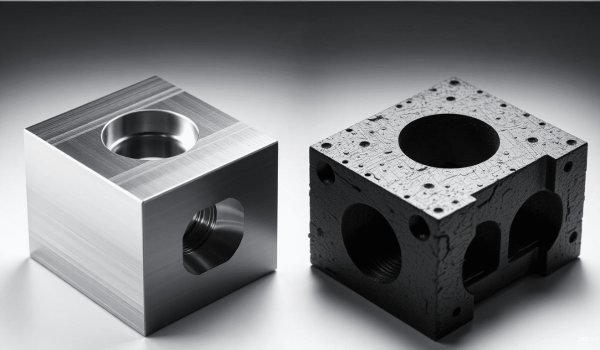
Are you torn between choosing cast iron or steel for your next manufacturing project? At first glance, iron and steel castings may seem similar, but they have distinct differences in applications, production processes, and properties. Understanding these differences is crucial for making informed decisions that impact performance, durability, and cost-effectiveness.
Understanding Cast Iron: Properties and Characteristics
When it comes to choosing the right material for your project, understanding cast iron is crucial. Cast iron is a ferrous alloy primarily composed of iron and carbon, with the carbon content ranging from 2-4%. This high carbon content, along with the presence of 1-3% silicon, gives cast iron its distinctive properties.
What is Cast Iron Made Of?
Cast iron is made through smelting iron-carbon alloys. The process involves melting pig iron, often with scrap steel and iron, limestone, and carbon in a blast furnace. The molten metal is then poured into molds, allowing it to solidify into the desired shape. The resulting alloy contains traces of manganese and may have impurities like phosphorus and sulfur.
Types of Cast Iron
There are several types of cast iron, including gray iron, ductile/nodular iron, white iron, malleable iron, and compacted graphite iron (CGI). Each type offers different mechanical properties, such as vibration damping, strength, ductility, hardness, and wear resistance, making them suitable for various applications.
Key Properties of Cast Iron
The high carbon content in cast iron provides excellent compressive strength, good heat retention, and wear resistance. Its mechanical properties include hardness, elasticity, and toughness, although it typically has lower tensile strength and ductility compared to steel.
Exploring Alloy Steel: Composition and Features
As a material that combines the strength of steel with the benefits of additional alloying elements, alloy steel is widely used in modern construction and manufacturing. You might be wondering what makes alloy steel so special. The answer lies in its composition and the various properties it offers.
What is Alloy Steel Made Of?
Alloy steel is primarily made of iron and carbon, with a carbon content typically ranging from 0.15% to 2%. This iron-carbon alloy is then enhanced with various elements such as chromium, nickel, molybdenum, and vanadium to improve its properties. The addition of these elements allows alloy steel to achieve superior tensile strength and ductility compared to regular carbon steel.
Types of Alloy Steel
There are several types of alloy steel, each designed for specific applications. These include carbon steel, which varies in carbon content; stainless steel, known for its corrosion resistance due to its high chromium content; tool steel, used for cutting and machining; and structural steel, optimized for construction projects. Each type is tailored to meet the demands of its intended use.
Key Properties of Alloy Steel
Alloy steel boasts several key properties, including high tensile strength, excellent ductility, and good weldability. Its resistance to impact and corrosion, particularly in stainless varieties, makes it a preferred choice for applications requiring both strength and flexibility. The precise control of carbon content and alloying elements enables manufacturers to customize alloy steel for a wide range of applications.

Alloy Steel vs Cast Iron: A Comprehensive Comparison
The debate between alloy steel and cast iron centers around their unique compositions and properties. Understanding these differences is crucial for selecting the right material for your project.
Carbon Content and Composition
The fundamental difference between alloy steel and cast iron lies in their carbon content. Cast iron contains 2-4% carbon, while alloy steel contains less than 2%. This difference significantly affects their physical and mechanical properties.
Melting Point Differences
Cast iron melts at approximately 2200°F (1150-1300°C), whereas alloy steel has a higher melting point, ranging from 2500-2800°F (1370-1510°C). This impacts their processing requirements and heat resistance.
Strength Characteristics
Cast iron excels in compressive strength, making it resistant to crushing forces. In contrast, alloy steel demonstrates superior tensile strength, allowing it to withstand pulling forces without breaking.
Castability and Formability
Cast iron is easier to cast due to its excellent flowability and minimal shrinkage during cooling. This makes it ideal for complex shapes with intricate details. Alloy steel, however, has higher viscosity and greater shrinkage.
Corrosion and Wear Resistance
Alloy steel, particularly stainless varieties, generally offers better corrosion resistance due to the presence of chromium, which forms a protective oxide layer. Cast iron is more prone to rusting unless treated or coated. Both materials exhibit excellent wear resistance but in different ways.
Performance Factors: Weight, Durability, and Cost
When deciding between cast iron and alloy steel, several key performance factors come into play, including weight, durability, and cost. These factors are crucial in determining which material is best suited for your specific application.
Weight and Density Comparison
Cast iron typically has a higher density (7.0-7.8 g/cm³) compared to alloy steel (approximately 7.85 g/cm³), making cast iron components heavier for the same dimensions. This weight difference impacts transportation costs and structural load calculations, particularly in industries like automotive and aerospace.
Durability and Lifespan
Alloy steel generally offers superior durability due to its higher tensile strength and impact resistance. However, cast iron excels in applications requiring vibration damping, heat resistance, and wear resistance, potentially outlasting steel in these specific scenarios.
Cost Considerations
Cast iron is typically 20-40% less expensive than alloy steel in initial material and production costs. However, lifecycle cost considerations may favor alloy steel due to its greater durability and lower maintenance requirements.
Applications of Cast Iron in Modern Industries
With its excellent durability and heat retention, cast iron continues to be widely used across different sectors. Its versatility is evident in various applications, ranging from industrial machinery to consumer products.
Automotive and Machinery Applications
In the automotive industry, cast iron is used for engine blocks, cylinder heads, and brake components due to its vibration damping and wear resistance. It’s also crucial in heavy machinery for machine tool bases and hydraulic cylinders, benefiting from its compressive strength.
Construction and Infrastructure Uses
Cast iron is used in construction for manhole covers, drainage systems, and pipes, leveraging its corrosion resistance and compressive strength. Its durability makes it ideal for infrastructure projects, including bridges and architectural elements.
Cookware and Consumer Products
The superior heat retention of cast iron makes it a favorite in cookware manufacturing, with products like skillets and Dutch ovens prized for even heating. It’s also used in consumer products such as wood stoves and decorative elements, combining strength with aesthetic appeal.
Applications of Alloy Steel in Various Sectors
You can find alloy steel being used in multiple applications across different industries. Its unique properties make it an ideal material for various critical uses.
Automotive and Aerospace Industries
Alloy steel is crucial in the automotive and aerospace industries due to its high tensile strength and resistance to fatigue. It is used in manufacturing chassis parts, crankshafts, gears, and suspension systems that must withstand constant stress.
Construction and Structural Applications
In construction and civil engineering, alloy steel is used for structural beams, reinforcing bars for concrete, bridge components, and high-rise building frameworks. Its strength-to-weight ratio offers significant advantages in these applications.
Tools, Equipment, and Manufacturing
Alloy steel is also vital in the production of tools, equipment, and manufacturing machinery. Its hardness, wear resistance, and dimensional stability make it ideal for cutting tools, dies, molds, and precision instruments used in various manufacturing processes.
Choosing Between Cast Iron and Alloy Steel for Your Project
Understanding the strengths and weaknesses of cast iron and alloy steel is essential for selecting the most appropriate material for your specific needs. When deciding between these two materials, several factors come into play, including cost, performance requirements, and environmental impact.
Factors to Consider When Selecting Materials
When selecting between cast iron and alloy steel, begin by analyzing the mechanical requirements of your project. If your application demands high tensile strength, ductility, and impact resistance, alloy steel is likely the better choice. On the other hand, for applications that prioritize compressive strength, vibration damping, and wear resistance at a lower cost, cast iron may be more suitable.
Project-Specific Requirements
Consider the specific needs of your project, including environmental exposure, manufacturing process constraints, weight restrictions, and budget limitations. For instance, projects exposed to corrosive environments benefit from alloy steel’s superior corrosion resistance, while complex shapes are often more economically produced in cast iron due to its castability.
Long-Term Performance Expectations
Evaluate the long-term performance expectations of your project, including maintenance requirements, service life, thermal performance needs, and aesthetic requirements. Alloy steel generally offers longer service life with less maintenance in mechanically stressful applications, while cast iron excels in heat retention and thermal stability.
Conclusion
After examining the properties and applications of both alloy steel and cast iron, it’s clear that each material has its unique advantages. Cast iron, with its high carbon content, offers excellent wear resistance and heat retention, making it ideal for applications such as engine blocks and cookware. On the other hand, alloy steel, with its lower carbon content and added alloying elements, provides superior strength, durability, and adaptability, suiting it for structural components and automotive parts.
When choosing between these materials for your project, consider factors such as mechanical demands, environmental conditions, and budget constraints. Partnering with Fecision for expert metal casting services can help you navigate these choices and deliver high-quality components optimized for your specific application requirements. By understanding the distinct characteristics of alloy steel and cast iron, you can make an informed decision that balances performance, durability, and cost-effectiveness.
FAQ
How do the tensile strengths of cast iron and alloy steel compare?
Alloy steel generally has a higher tensile strength compared to cast iron, making it more suitable for applications requiring high strength and durability.
Which material is more resistant to corrosion: cast iron or alloy steel?
Alloy steel, particularly when alloyed with elements like chromium, offers superior corrosion resistance compared to cast iron. However, certain types of cast iron, like ductile iron, can also exhibit good corrosion resistance.
How do the costs of cast iron and alloy steel compare?
The cost of cast iron and alloy steel can vary based on the specific type, production process, and application. Generally, cast iron can be less expensive to produce, but alloy steel’s superior properties may justify its higher cost for certain projects.
What factors should be considered when choosing between cast iron and alloy steel for a project?
When selecting between cast iron and alloy steel, consider factors such as the project’s specific requirements, the material’s strength and durability, corrosion and wear resistance, and long-term performance expectations.