Injection molding is a popular manufacturing process that produces plastic parts in large volumes with high precision and repeatability. During this process, molten plastic is injected into a mold cavity, where it cools and hardens into the desired shape. This technique is prevalent in industries such as automotive, consumer goods, electronics, and medical devices due to its cost-effectiveness and scalability.
The runner system is a critical component of the injection molding process. It serves as the pathway that guides molten plastic from the injection unit into the mold cavities. Its design and efficiency play a crucial role in the overall effectiveness of the injection molding process, affecting product quality, cycle time, and material waste.
This article explores the purpose of a runner on a mold, types of runner systems, their comparative benefits and drawbacks, and the key considerations when designing runners for injection molds.
What is a Runner in Injection Molding?
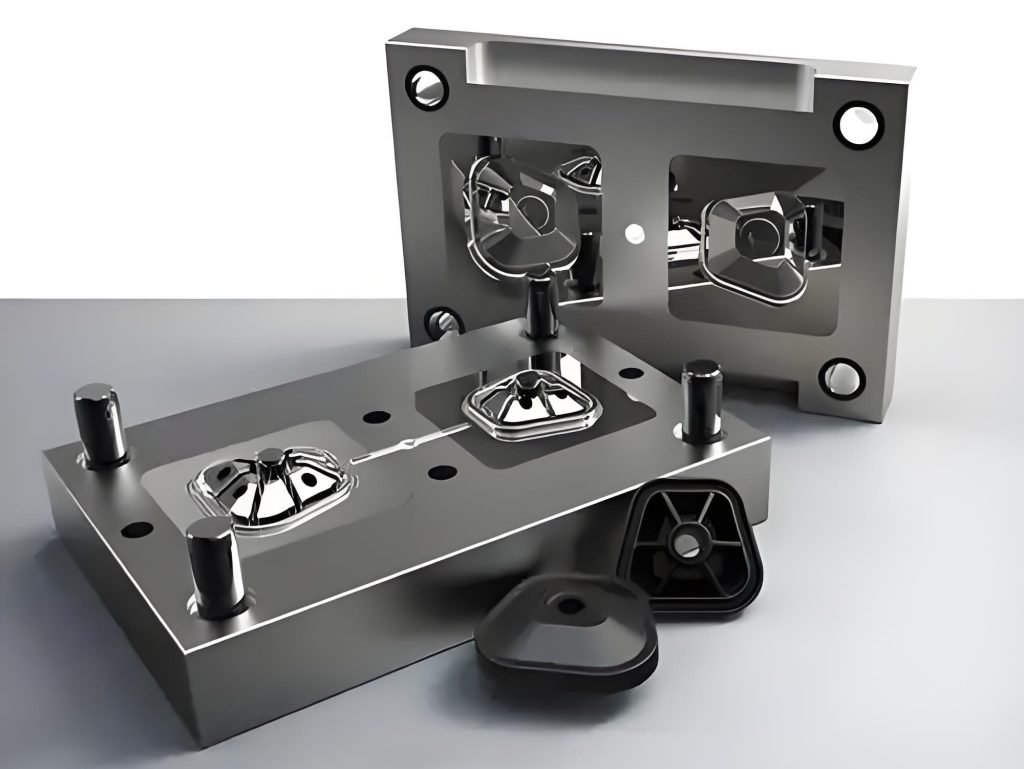
A runner is a channel within the mold that directs molten plastic from the injection nozzle to the gate, leading it into the mold cavity. These channels carry the hot material while maintaining the optimal temperature and pressure. The main function of runners is to guide plastic material efficiently, to have consistent flow and minimize resistance.
Runners directly impact pressure, temperature control, warping, shrinkage, packing and residual stresses in the final product. More than 35% of the pressure required to fill a mold is usually caused by the runner system. This pressure influence makes runner design critical for part quality as even small changes in pressure or temperature can compromise the product’s structure.
How do runners fit into the mold system?
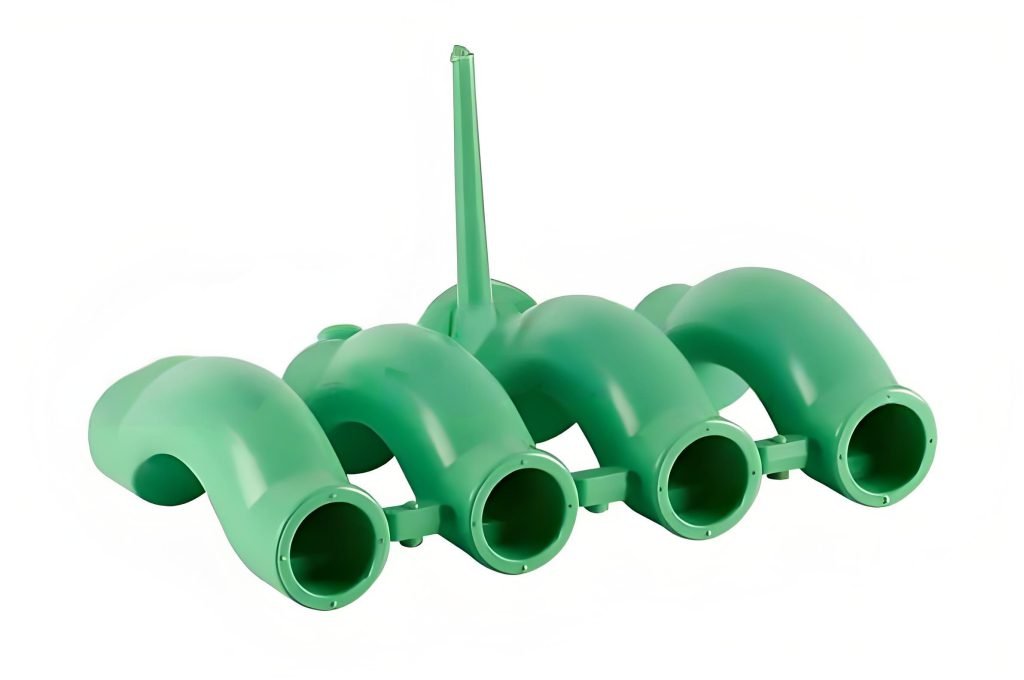
Runners are machined into the surface of one or both mold halves along the parting line. Unlike sprues that deliver material into the center of the mold plate, runners follow channels cut along the parting line. In multi-cavity molds, runners distribute the molten material from a central injection point to various cavities.
The complete runner system consists of three main components:
- Sprue: The initial channel where molten plastic enters from the machine nozzle
- Runners: Runners are distribution pathways of different lengths that connect the sprue to the gates.
- Gates: Restricted transition points where material enters the actual mold cavity
Note: In the material flow sequence, the runner comes after the sprue. After coming out of the machine nozzle, molten plastic travels through this sequence before filling the cavity to form the part.
Difference between sprue, runner, and gate
While these components work together, they have different functions:
- Sprue: A vertical channel milled through the entire thickness of the injection mold from the outer surface to the parting line. It directly receives molten plastic from the injection nozzle.
- Runner: Shallow channels cut into the face of one or both mold halves. They transfer the material from the sprue to the gates leading to individual cavities.
- Gate: The final constricted transition point where material enters the part cavity. Gates control the flow and prevent excess material from entering.
This three part system ensures proper material distribution which is very important in multi-cavity molds where balanced flow to each cavity is critical to produce uniform parts.
The Purpose of a Runner on a Mold
The runner’s main purpose is to guide the smooth and uniform flow of molten plastic from the sprue to the mold cavities. A well designed runner system can greatly improve part quality and consistency. Here are the functions:
- Flow from Sprue to Cavities: The runner connects the sprue to the gates and ensures the molten plastic reaches each mold cavity efficiently. The path must be optimized to minimize pressure drop and maintain material integrity.
- Uniform Distribution of Molten Material: Uniform flow is critical to achieve parts with consistent mechanical properties, dimensions and surface finishes. A well designed runner system distributes the plastic evenly, especially in molds with multiple cavities.
- Balanced Pressure and Temperature: The runner maintains a consistent temperature and pressure throughout the mold. This is important to prevent issues like sink marks, warping or incomplete filling of the cavities.
- Product Quality and Cycle Time: A poorly designed runner can lead to longer cycle times, material waste and defects in the final product. Efficient runner systems result in shorter cycle times and higher quality output.
Types of Runner Systems in Injection Molding
Injection molding runner systems can impact plastic part production’s efficiency, cost and quality. Cold, hot, and insulated runner systems all offer distinct advantages and drawbacks. In some specialized applications an integrated hot plate can also be used to further improve performance.
1. Cold Runner System
The cold runner system has unheated channels and gates that guide molten plastic from the sprue to the mold cavities. As the name suggests, these channels cool and solidify during each cycle. Once the part is ejected, the solidified sprue and runners are removed as waste. This system is suitable for prototyping, low volume production and scenarios where material or color changes are frequent.
Pros:
- Cost effective: No need for complex equipment or heating systems, it’s more affordable.
- Flexible material use: Easy to switch materials and colors.
- Modifiable design: Runner layouts can be adjusted for different part shapes and sizes.
Cons:
- Material waste: Solidified runners are discarded after each cycle, increasing material usage and disposal costs.
- Slower production: Removing the solid runners adds time to each cycle, reducing overall efficiency.
2. Hot Runner System
The hot runner system utilizes a heated manifold and nozzles to maintain the plastic in a molten state as it flows through the runner channels. This allows direct flow from the injection machine to the mold cavities without producing solidified runner waste. It’s widely used for high volume, multi-cavity production due to its efficiency and waste reduction.
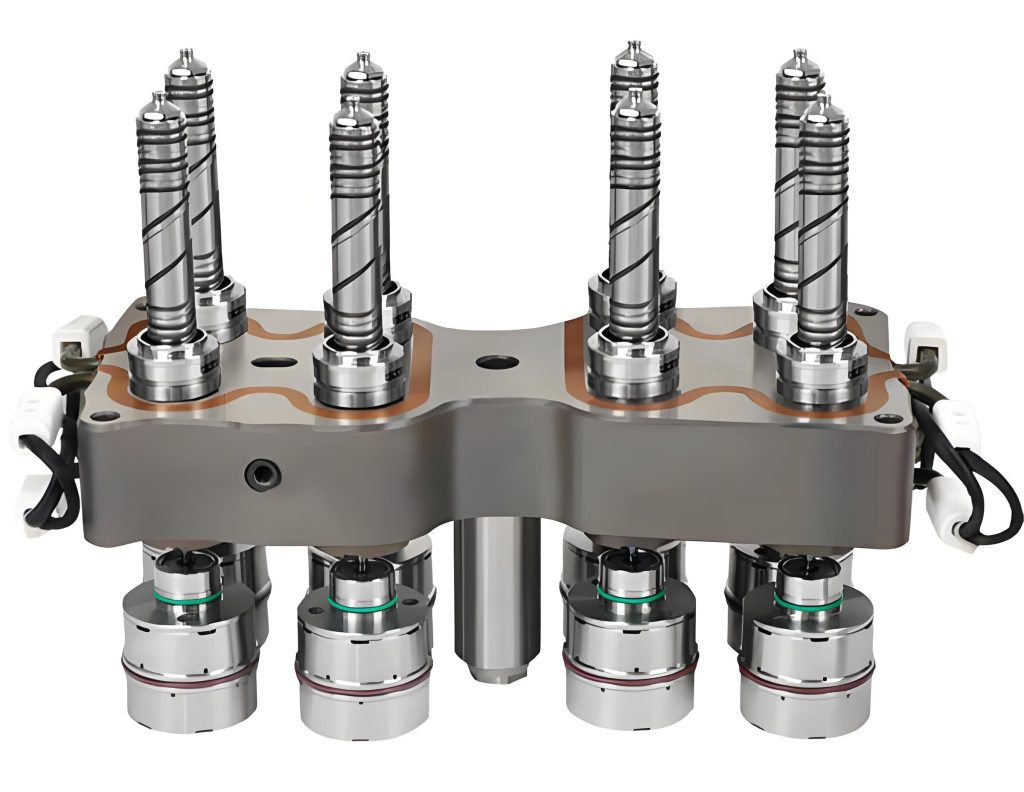
Pros:
- Minimal material waste: No need to trim and dispose of solid runners.
- Better part quality: Reduces defects like weld lines and visible gate marks.
- Faster cycles: Molten plastic flows continuously, shorter cycle times and higher productivity.
Cons:
- High initial investment: Requires specialized heating equipment and more complex mold design.
- Maintenance required: Heated components need to be serviced regularly to avoid failures.
- Material limitations: Not all plastics are compatible due to sensitivity to heat exposure.
3. Insulated Runner System
An insulated runner system is a hybrid solution that combines the simplicity of cold runners with some benefits of hot runner technology. It uses thermal insulation to retain heat within the runner channels, minimizing heat loss to the surrounding mold plates. This is suitable for applications that require energy efficiency and temperature control.
Pros:
- Energy savings: Insulation reduces heat loss, saves energy during molding.
- Better temperature control: Stable temperatures result in better part quality.
- Less material waste: Like hot runners, insulated systems avoid solidified runner scrap.
Cons:
- Complex design: Requires insulation materials and mold planning.
- Higher setup cost: Additional materials and engineering increases initial cost.
- Limited flexibility: Insulation may restrict runner and part geometry options.
4. Hot Plate
In advanced molding applications, a hot plate can be integrated into the mold to improve thermal consistency. This ensures uniform heating of the mold surfaces, which is beneficial for high temperature materials or fine surface finishes.
Pros:
- Better part finish: Uniform heating reduces defects and improves surface quality.
- Shorter cycles: Speeds up cooling, increases throughput.
- Wider material range: Enables molding of engineering plastics that require higher temperatures.
Cons:
- More complex molds: Requires additional components and control systems.
- Higher cost: Increases mold manufacturing and maintenance cost.
- Ongoing maintenance: Hot plate system needs to be checked and maintained regularly.
Hot vs Cold Runners
The choice between these systems affects many production factors:
| Hot Runner Systems | Cold Runner Systems | |
| Initial Cost | Higher upfront investment | Lower setup and maintenance costs |
| Material Waste | Eliminates waste, no runners to remove | Produces waste through solidified runners |
| Cycle Time | Faster due to no runner cooling time | Slower due to runner cooling requirements |
| Material Compatibility | Limited to heat-sensitive materials | Works with a wide variety of materials including heat-sensitive polymers |
| Part Quality | Better part esthetics, greater dimensional consistency | May have visible gate marks, potential pressure variations |
Indeed, while hot runners offer higher productivity and less waste, cold runners are popular for lower initial cost and simplicity, especially for low volume production.
How Runner Design Affects Part Quality and Efficiency
Runner design has a direct impact on injection molding operations, with good design affecting both part quality and manufacturing efficiency. A well designed runner system ensures smooth material flow, consistent temperature distribution and balanced pressure throughout the mold.
Pressure and temperature control
The design of an injection molding runner system has a big impact on pressure distribution and temperature management in the mold. According to industry data, 35% of the pressure required to fill a mold is attributed to the runner system. Runner diameter plays a critical role—smaller diameters increase flow resistance and larger diameters reduce it, affecting pressure distribution across cavities.
Temperature control also depends on runner design. A properly designed runner system promotes uniform cooling, minimizing defects resulting from temperature fluctuations. For multi cavity molds, balanced runners are crucial as they maintain temperature across all cavities, preventing quality variations between parts.
Cycle time and material waste
Runner systems impact production efficiency through cycle times and material consumption. Hot runner systems have shorter cycle times than cold runners as they don’t require ejection of solidified runners between cycles. Hot runners also minimize material waste as plastic is kept in molten state, no need to discard solidified runners.
Cold runner systems often produce more waste, may require material regrinding and reuse, and lead to longer cycle times due to extended cooling needs. These factors affect production cost and efficiency.
Common defects caused by poor runner design
Poor runner design causes many quality issues:
- Uneven cavity filling: Imbalanced runners fill some cavities before others, resulting in inconsistent part quality and dimensional variations
- Pressure spikes: Poor runner balance creates pressure surges during filling, causing flash, sink marks or warping
- Flow marks: Incorrect runner size causes visible flow lines or patterns on finished parts
- Short shots: Short shots occur when insufficient runner dimensions limit material flow, resulting in incomplete cavity filling.
Runner optimization through simulation software like Autodesk Moldflow helps manufacturers identify and address these issues before mold construction, potentially reducing injection pressure by up to 50%.
Design considerations for a good runner system
Designing an effective runner system requires thorough planning and attention to numerous factors. Good runner design affects part quality, production efficiency and overall cost of manufacturing.
Choosing runner shape and size
Runner cross section shape affects flow efficiency and cooling characteristics. Common runner profiles:
- Circular: Best flow efficiency with minimal pressure drop but requires machining in both mold halves
- Trapezoidal: Good flow characteristics but easier to manufacture
- Semicircular: A compromise between machining ease and flow efficiency
Runner diameter is also critical. Typically, experts recommend a minimum runner diameter of approximately 1.5 times the part’s wall thickness to ensure adequate packing. Larger diameters fill better with lower pressure but more material and cooling time, smaller diameters reduce waste but may create excessive shear heating. This balance between flow efficiency and material conservation is the basis of good runner sizing.
Balancing flow in multi-cavity molds
In multi-cavity molds, a balanced runner system ensures that the plastic melt flows evenly to all cavities at the same time, preserving uniform pressure and temperature throughout the molding process. Unbalanced filling results in inconsistent part quality, some cavities produce good parts while others short shots or flash.
A naturally balanced layout requires equal flow distance from the injection point to each cavity. But even geometrically balanced systems can experience non-uniform filling due to shear induced temperature variations that create layers of hotter, more fluid melt near the mold walls. Advanced technologies like MeltFlipper can rotate the melt’s laminar orientation to distribute these temperature variations evenly among all cavities.
Gate placement and runner layout
Optimal gate placement affects part quality. Gates should be positioned at the thickest wall section of the plastic part to enable smooth flow from thicker to thinner areas. This prevents jetting, a defect where plastic shoots through the gate, creating a snake-like pattern.
Gates should be placed in non-cosmetic areas whenever possible. For parts with specific structural requirements, gates should align with the main force direction.
Material compatibility and thermal control
Different materials require different runner configurations. Semi-crystalline materials can utilize smaller runner sizes, while amorphous materials generally require larger runners to help lower pressure demands.
Thermal control is crucial, especially for hot runner systems. Each component’s temperature must be controlled precisely to optimize the process for specific resins. Inconsistent temperatures result in non-uniform filling and part defects, so proper thermal management is key to process stability.
Cold or Hot Runners in Injection Mold Design
Choosing the right runner system is a key decision that affects manufacturing economics, part quality and production efficiency. Rather than a one-size-fits-all approach, manufacturers must consider several interconnected factors to decide whether a hot or cold runner system will work best.
Factors to consider
Material compatibility is the primary consideration when choosing between runner systems. Heat sensitive polymers perform better with cold runner systems as prolonged exposure to high temperatures in hot runners can cause material degradation. Hot runner systems excel when processing a wide range of standard thermoplastics that maintain their properties at elevated temperatures.
Maintenance requirements differ significantly between systems. Hot runner molds require careful temperature control and regular maintenance of heaters and nozzles. Cold runner systems are simpler to maintain for operations with limited technical resources although they generate more waste.
Another important factor is the ease of color or material changes. Cold runner systems offer more flexibility, they are better for operations that require frequent changeovers. Hot runner systems can be challenging during color changes due to material retention in heated channels.
Cost, material, part design, production volume
The cost equation goes beyond initial investment. Although cold runner molds have lower setup and maintenance costs, their higher material waste and slower cycle times may offset these savings in the long run. Although hot runner systems have a higher upfront cost, they are generally more economical for high-volume production runs.
Part design complexity directly impacts system selection. Complex, precision shaped parts with tight tolerances often benefit from hot runner systems which provide better control over melt flow and temperature. Simple parts with less demanding specifications may be served by cold runner systems.
Production volume is perhaps the most critical factor. Low to medium volume production favors cold runner systems due to lower initial investment. Hot runner systems are well-suited for high-volume production because they offer material savings and faster cycle times.
When to use hot runner in injection mold
Hot runner systems are best suited when:
- Production volumes are high – The initial investment is justified through material savings and efficiency over longer production runs
- Material waste reduction is critical – For expensive materials or environmentally conscious operations
- Cycle time is critical – When production speed impacts profitability
- Part quality is critical – For applications that require precise dimensional stability and consistency
- Multi-cavity molds are used – To ensure balanced filling and consistent part quality across all cavities
In the end, it all comes down to a thorough evaluation of material properties, production requirements, part specifications and economic factors against both short term and long term manufacturing goals.
Conclusion
The runner system is a critical part of the injection molding process and directly impacts product quality, cycle time and production efficiency. Understanding the purpose of a runner on a mold helps manufacturers make informed decisions on mold design and runner system selection.
Cold runners are simple and low cost, good for short runs and simple parts. Hot runner systems are more efficient and help produce better-quality parts, especially when making large numbers of items. By considering cost, material behavior, part complexity and production goals manufacturers can choose the right runner system for their needs. A good runner system is key to maximizing productivity and getting consistent high quality parts in injection molding.