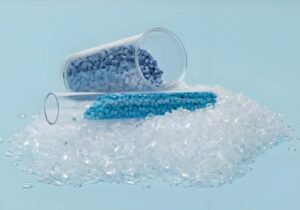
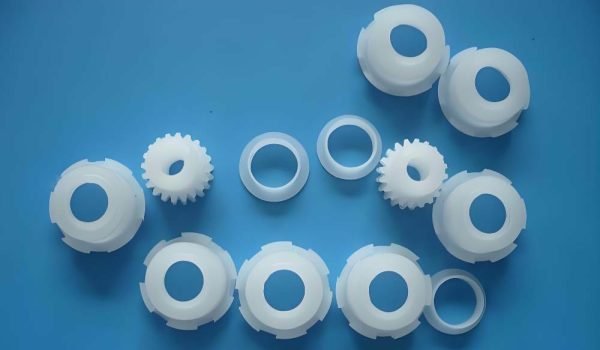
Did you know that over 100 million tons of engineering plastics are used annually worldwide, with a significant portion being Polyoxymethylene (POM), also known as Acetal? This high-performance thermoplastic is valued for its exceptional rigidity, dimensional stability, and low friction characteristics, making it a crucial material in various industries.
Whether you’re working on automotive, consumer electronics, or medical devices, POM’s unique characteristics make it an ideal choice. This comprehensive guide will walk you through the process of working with POM for your injection molding projects, from material selection to design considerations, ensuring you can leverage this versatile engineering thermoplastic to create high-quality, durable parts.
Acetal(POM) Material Overview
Acetal, also known as Polyoxymethylene (POM), is a versatile engineering plastic used in various high-precision applications.
What Is Polyoxymethylene (POM)?
Polyoxymethylene (POM) is a type of polymer that consists of repeating units of -CH₂O-, derived from polymerized formaldehyde. This arrangement forms a linear chain with a highly ordered crystalline pattern, contributing to the material’s rigidity and dimensional stability. In essence, POM is a highly crystalline polymer known for its excellent mechanical properties.
The highly ordered structure of POM gives it a high level of stiffness and resistance to fatigue, making it suitable for parts that undergo repeated stress.
Chemical Structure and Properties
The chemical structure of POM is characterized by its repeating -CH₂O- units, which are arranged in a linear chain. This structure is responsible for POM’s exceptional mechanical properties, including high tensile strength and stiffness. The compact molecular arrangement also results in a smooth surface with a low coefficient of friction, ideal for applications where parts need to slide against each other.
POM’s chemical structure provides excellent resistance to many solvents, fuels, and cleaning agents. However, it is vulnerable to strong acids and oxidizing agents, which should be considered when designing parts. Understanding the relationship between POM’s chemical structure and its properties is crucial for predicting how parts will perform in specific application environments.
Moldability Characteristics of POM
To achieve optimal results in injection molding with POM, it’s essential to understand its moldability characteristics. POM, a semi-crystalline polymer derived from formaldehyde, has a compact molecular structure that supports high mechanical strength and resistance to deformation under load.
Flow Behavior and Viscosity
POM exhibits a relatively low viscosity, which allows it to fill complex mold geometries with ease. Its flow behavior is influenced by temperature and pressure, making it crucial to control these parameters during the injection molding process.
Shrinkage and Warpage Considerations
Shrinkage and warpage are significant concerns when molding POM. The material’s high crystallinity (typically 75-85%) leads to considerable shrinkage, which can be managed by controlling the mold temperature and cooling rate. Proper cooling control helps minimize internal stresses and warpage.
Crystallization Behavior
The crystallization behavior of POM significantly influences its processing requirements and final part properties. The rate and degree of crystallization are affected by the cooling rate and mold temperature. Higher mold temperatures promote more complete crystallization, resulting in better mechanical properties. Nucleating agents can be added to POM formulations to enhance crystallization uniformity and reduce cycle times.
Types of Acetal(POM) Materials
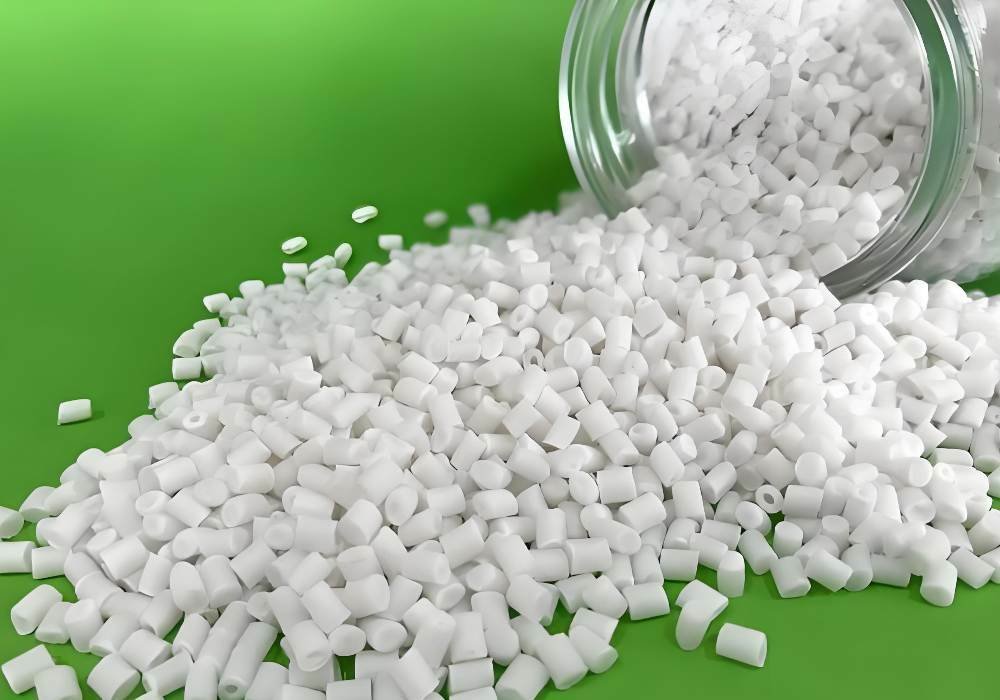
To choose the right Acetal(POM) for your project, you need to know about the different types available in the market. Acetal(POM), or Polyoxymethylene, is categorized mainly into two types based on its molecular structure: homopolymer and copolymer.
Homopolymer vs. Copolymer POM
Homopolymer POM, such as DuPont’s Delrin, is known for its high mechanical strength and excellent wear resistance, making it particularly suitable for precision mechanical parts like gears and bearings. On the other hand, copolymer POM, offered by brands like Celanese’s Hostaform and Celcon, provides improved thermal stability and broader chemical resistance compared to homopolymer varieties. Understanding the differences between homopolymer and copolymer POM is crucial for selecting the right material for your specific application.
The choice between homopolymer and copolymer POM depends on the specific requirements of your project, including the desired properties and applications. For instance, if your project demands high mechanical strength and wear resistance, homopolymer POM might be the better choice. However, if you need a material with improved thermal stability and chemical resistance, copolymer POM could be more suitable.
Common Brand Names and Variations
POM materials are marketed under various brand names by different manufacturers, each offering slightly different formulations optimized for specific properties and applications. For example, DuPont’s Delrin is a well-recognized homopolymer POM brand, while Celanese offers Hostaform and Celcon as their copolymer POM grades. Other notable brands include BASF’s Ultraform, Mitsubishi’s Iupital, and Polyplastics’ Duracon, each with specific grades tailored for applications ranging from automotive components to consumer electronics.
When specifying POM for your project, you’ll need to consider not just the type (homopolymer vs. copolymer) but also the specific brand and grade, as manufacturers offer specialized formulations with additives for enhanced UV stability, improved lubricity, increased impact resistance, or other specific performance characteristics.
Key Properties of Acetal(POM) for Injection Molding
When considering Acetal(POM) for your injection molding projects, understanding its key properties is crucial. Acetal(POM) is a popular choice for various applications due to its excellent mechanical, thermal, and chemical properties.
Mechanical Properties
Acetal(POM) exhibits high stiffness, strength, and toughness, making it suitable for parts that require durability and resistance to wear. Its mechanical properties remain stable over a wide range of temperatures, ensuring consistent performance in various environments. The material’s surface integrity is maintained even when exposed to hydrocarbons, making it valuable for fuel system components and other applications where contact with these substances is expected.
Thermal Properties
POM demonstrates good thermal stability, with its properties remaining relatively consistent across a range of temperatures. This stability is crucial for applications where parts are exposed to varying thermal conditions. The material’s resistance to heat and cold ensures that it can be used in diverse environments without significant degradation.
Chemical Resistance
Acetal(POM) shows excellent resistance to a wide range of chemicals, including solvents, fuels, and lubricants, making it suitable for applications in chemically challenging environments. However, it’s vulnerable to strong acids, oxidizing agents, and chlorinated compounds. Copolymer POM grades generally offer better resistance to alkaline environments and hot water compared to homopolymer versions. When designing parts that will be exposed to chemicals, it’s essential to consult material compatibility charts and consider testing under actual application conditions.
By understanding these key properties, you can effectively utilize Acetal(POM) in your injection molding projects, ensuring that your parts meet the required standards for performance and durability.
Acetal(POM) Injection Molding Process
Acetal(POM) injection molding is a sophisticated manufacturing process that demands a thorough understanding of material properties and molding techniques. This process is critical for producing high-quality parts with precise dimensions and mechanical properties.
Material Preparation and Handling
Proper material preparation is essential for successful Acetal(POM) injection molding. POM is a hard plastic that cannot be glued, but it can be joined to other POM parts by melting. Melted POM does not adhere to steel tools used to shape it, which simplifies the molding process.
You should ensure that the POM material is dried according to the manufacturer’s recommendations before processing to prevent moisture-related defects.
Molding Parameters and Conditions
Controlling molding parameters is crucial for achieving the desired part quality. After injection molding, POM parts typically require a controlled cooling period to ensure dimensional stability and proper crystallization, which directly impacts the final mechanical properties.
The molding process should be optimized for factors such as temperature, pressure, and cooling time to produce parts with consistent quality.
Post-Processing Requirements
POM parts are generally ready for use directly after molding with minimal post-processing requirements. However, gate vestiges may need to be removed depending on your aesthetic and functional requirements.
Unlike many other thermoplastics, POM cannot be effectively bonded with conventional adhesives, making design for assembly particularly important. Mechanical fastening methods or welding techniques are typically preferred for joining POM components.
To ensure the quality of your POM parts, you should focus on dimensional accuracy, surface finish quality, and checking for potential defects such as sink marks, voids, or warpage during quality control inspections.
Advantages and Disadvantages of POM Injection Molding
As you explore POM for your injection molding needs, it’s vital to consider both its advantages, such as high strength and resistance, and its potential drawbacks.
Key Benefits for Engineering Applications
POM injection molding offers several key benefits that make it an ideal choice for various engineering applications. Its high strength, stiffness, and resistance to heat and chemicals make it suitable for demanding projects. Additionally, POM’s low friction coefficient and excellent dimensional stability contribute to its popularity in precision parts manufacturing.
The material’s resistance to temperature variations and its ability to maintain its quality under different conditions are significant advantages. With proper processing, POM parts can exhibit excellent surface finishes and tight tolerances, making them suitable for a variety of applications, from automotive components to consumer electronics.
Limitations and Challenges
Despite its many advantages, POM has several limitations and challenges that need to be considered. One of the primary concerns is its sensitivity to UV light, which can cause degradation when exposed to prolonged sunlight. This restricts its use in outdoor applications unless properly protected with UV stabilizers or coatings.
POM is also susceptible to environmental stress cracking when exposed to certain chemicals while under mechanical stress. Its relatively high thermal expansion coefficient compared to metals can create challenges when designing precision parts that interface with metal components across wide temperature ranges.
Furthermore, POM’s higher cost compared to commodity plastics and potential processing challenges, such as thermal degradation during molding, need to be carefully managed.
Processing Best Practices for Acetal Injection Molding
Mastering the best practices for acetal injection molding is essential for producing high-quality POM parts consistently. This involves a comprehensive understanding of the material’s properties and the injection molding process.
Temperature and Pressure Control
Temperature and pressure control are critical in acetal injection molding. You need to carefully manage the barrel temperature, mold temperature, and injection pressure to ensure optimal processing conditions. Proper temperature control helps in achieving the desired crystallinity and mechanical properties in POM parts.
Moisture Management
Moisture management is another crucial aspect. POM is sensitive to moisture, which can affect its processing and part quality. You should dry the material before processing and maintain a controlled environment to prevent moisture absorption. This helps in minimizing defects and ensuring consistent part quality.
Troubleshooting Common Issues
When troubleshooting common issues in acetal injection molding, several factors come into play.
- For sink marks, examine wall thickness uniformity and adjust packing pressure and time, as POM’s high crystallinity makes it susceptible to volumetric shrinkage.
- For warpage, evaluate gate location and cooling system design, as uneven cooling can cause warpage.
- Surface defects like flow lines can be addressed by adjusting injection speed profiles.
- Investigate material degradation if you encounter brittleness or part failure, and stabilize mold temperature control and packing parameters for dimensional inconsistency.
Design Guidelines for POM Injection Molded Parts
When designing parts with POM injection molding, several key considerations can significantly impact the final product’s quality and functionality.
Wall Thickness Recommendations
Maintaining uniform wall thickness is crucial for POM injection molded parts. Variations in thickness can lead to sink marks, warpage, or uneven cooling, which may compromise the part’s integrity. For most applications, a wall thickness between 1.5 mm and 3.0 mm is recommended. However, this can vary depending on the specific requirements of your project.
Gate Location and Design
The gate location and design play a critical role in the quality of POM injection molded parts. Proper gate placement helps ensure that the material flows evenly into the mold cavity, reducing the risk of defects such as weld lines or air traps. Typically, a gate size that is 0.5 to 1.0 mm in thickness is recommended, but this should be adjusted based on the part’s geometry and the molding conditions.
Draft Angles and Surface Finishes
Draft angles are essential for facilitating the ejection of POM parts from the mold. For textured surfaces, a minimum draft angle of 0.5° per side is recommended, while smooth surfaces require at least 1.0°. When designing textured surfaces, it’s advisable to increase the draft angle proportionally to the texture depth to ensure proper part release.
POM reproduces mold surface details with high fidelity, allowing for a range of surface finishes. However, the material’s natural lubricity should be considered when designing for specific friction requirements.
POM’s surface finish can be tailored to meet specific functional needs, such as creating grip surfaces or bearing surfaces within the same part. High-gloss finishes may reveal flow lines or weld lines more prominently than textured surfaces, influencing design decisions for visible components.
Ideal Applications of Acetal in Injection Molding
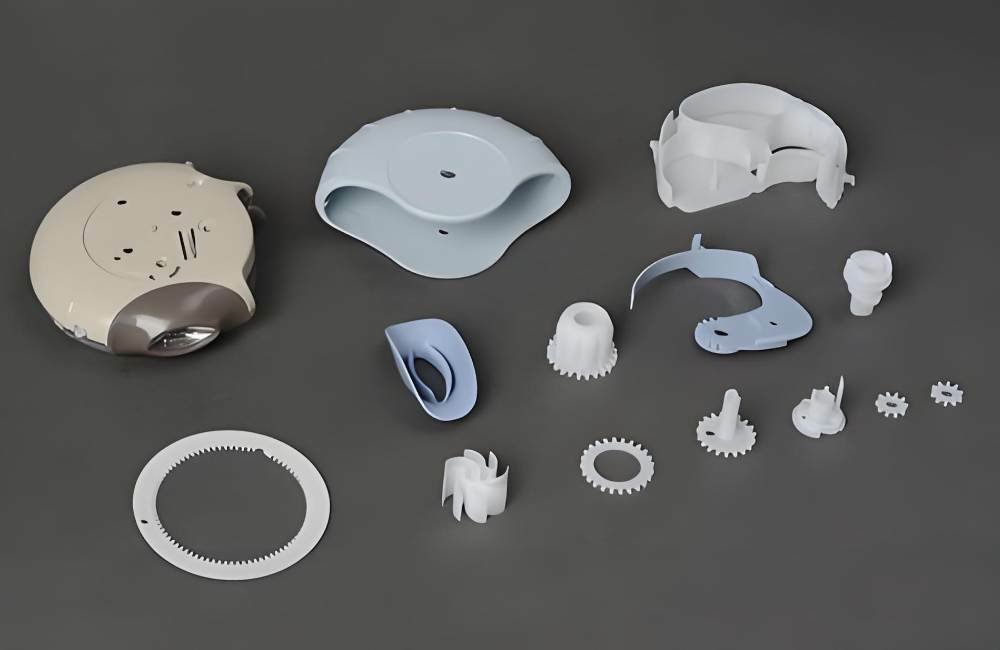
You can rely on POM for its exceptional performance in demanding applications.
Automotive Components
POM is widely used in the automotive industry for components that require high precision and durability. Its excellent mechanical properties make it suitable for parts such as gears, bearings, and other mechanical components.
Consumer Electronics
In consumer electronics, POM is used for its rigidity and aesthetic qualities. It’s often used in components that require a smooth surface finish and dimensional stability.
Medical Devices and Equipment
Medical device manufacturers utilize POM for components requiring precision, durability, and resistance to repeated sterilization cycles. The material’s biocompatibility and dimensional stability make it ideal for surgical instruments, dental devices, and diagnostic equipment.
POM’s ability to be processed to tight tolerances while maintaining quality makes it perfect for precision components in various systems.
Conclusion
With its unique combination of strength and low friction, POM is a top choice for precision engineering applications. You’ve learned how Acetal(POM) injection molding offers exceptional dimensional stability and mechanical strength, making it ideal for various uses. By understanding the differences between homopolymer and copolymer POM, you can select the right formulation for your project.
Proper material preparation, temperature control, and design guidelines are crucial for successful POM injection molding. This guide provides the foundation you need to implement POM in your next project, whether it’s for automotive, consumer electronics, or medical devices, ensuring high-quality plastic parts.
At Fecision, we offer professional injection molding services for a wide range of materials, including Acetal (POM). If you’re planning a POM injection molding project, contact Fecision today to turn your ideas into precision-molded components.