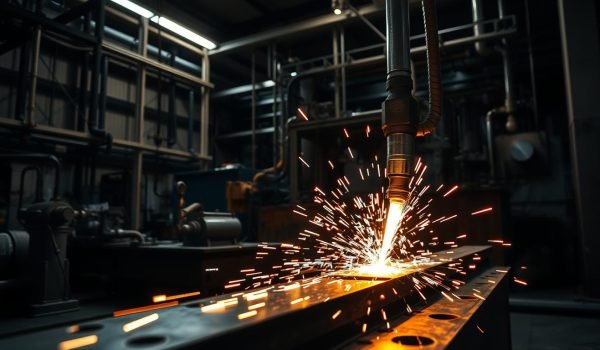
Plasma cutting uses an accelerated jet of hot plasma to cut through metal. It’s not only limited to steel but also can be used on stainless steel, aluminum, brass, and copper, among other conductive metals. Plasma cutting has revolutionized the way industries work with metal, offering a precise and efficient method for cutting through electrically conductive materials.
As you explore this guide, you’ll gain a deeper understanding of how plasma cutting works, its benefits, and the various applications across different industries, to determine if plasma cutting is the right solution for your metalworking projects.
Understanding Plasma: The Fourth State of Matter
To grasp the concept of plasma cutting, you first need to understand what plasma is. Plasma is often referred to as the fourth state of matter, alongside solids, liquids, and gases. When gas is heated to an extremely high temperature, or subjected to a strong electromagnetic field, electrons separate from atoms, creating a mixture of electrons, ions, and neutral particles.
What Exactly Is Plasma?
Plasma is an ionized gas that is electrically conductive. This state of matter is not as commonly known as the other three states, but it’s present in natural phenomena like lightning and stars.
How Plasma Forms
Plasma forms when a gas is heated to a high temperature, causing the atoms to ionize. This process creates a mixture of charged particles that can be controlled and directed, making plasma ideal for industrial applications like cutting.
What Is Plasma Cutting?
Plasma cutting is a process that uses a high-temperature, high-velocity jet of ionized gas to cut through electrically conductive materials. This technique has become a cornerstone in metal fabrication due to its precision and efficiency. By creating an electrical circuit through the workpiece, plasma cutting allows for clean and accurate cuts.
Definition and Basic Principles
At its core, plasma cutting involves generating a plasma arc that melts and expels metal, creating a cut. The plasma is created by ionizing gas, typically compressed air or inert gases, which is then accelerated through a nozzle, forming a high-velocity jet. This process requires a plasma torch, a power source, and a grounding clamp to complete the electrical circuit.
Historical Development of Plasma Cutting Technology
Plasma cutting technology evolved from plasma welding in the 1960s. Initially, it was used for cutting sheet metal and plate, offering a significant improvement over traditional cutting methods. By the 1980s, plasma cutting had become a mainstream method in metal fabrication, known for its productivity and precision. Over the decades, advancements in technology have made plasma cutting more accessible and affordable for both industrial and hobbyist applications.
Types of Plasma Cutting Systems
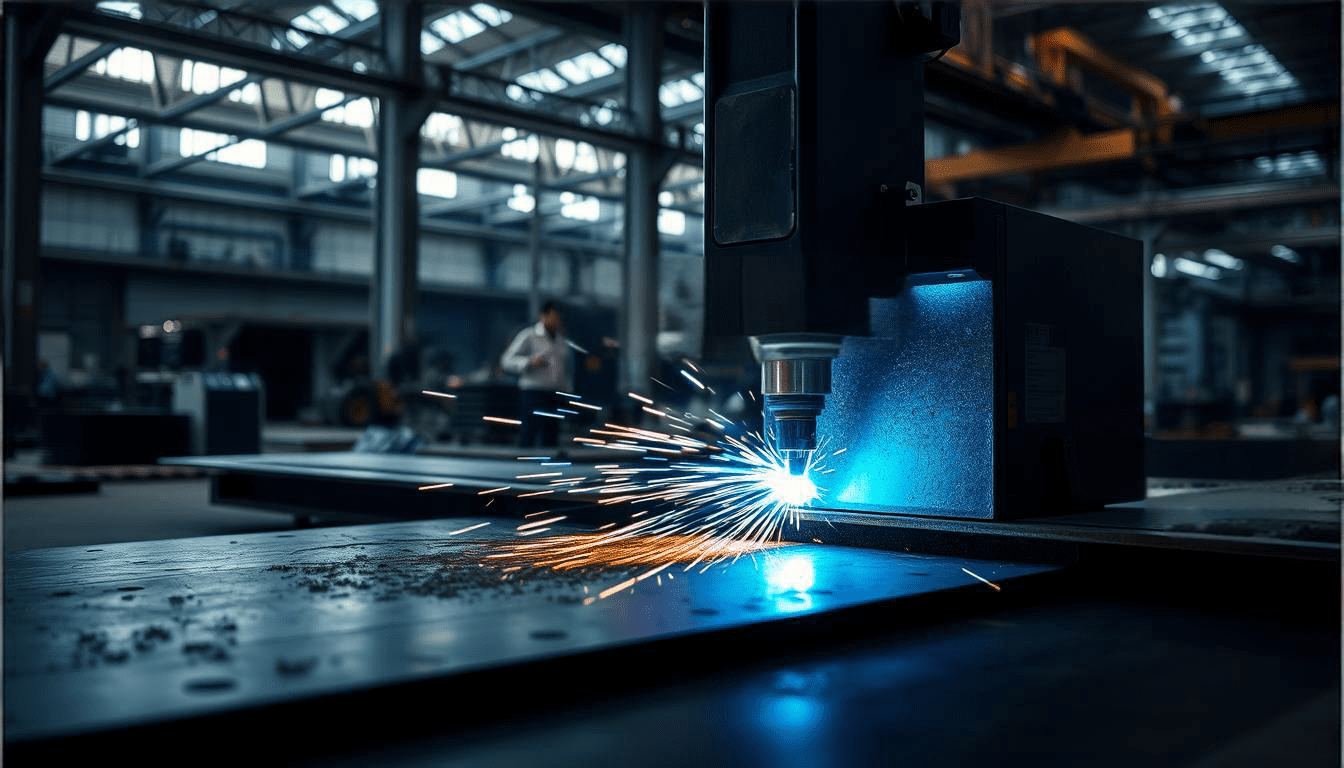
Plasma cutting technology has evolved to offer various systems tailored to different needs and applications. You’ll find a range of plasma cutting systems available, from portable handheld units to sophisticated industrial machines.
Conventional Plasma Cutting
Conventional plasma cutting systems are typically more affordable and suitable for general cutting tasks where extreme precision isn’t required. These systems provide a reliable cutting solution for various materials.
Precision Plasma Cutting
Precision plasma cutting systems utilize advanced technology to create cleaner, more accurate cuts with minimal dross and distortion. This results in higher quality finishes and reduced post-cutting processing.
CNC Plasma Cutting
CNC plasma cutting systems automate the cutting process using computer controls for consistent, repeatable results. There are various configurations, including 2D, 3D, and tube cutting capabilities, making them versatile for different applications.
When choosing a plasma cutting system, consider your specific needs. The right system can enhance your productivity and cut quality.
Materials Compatible with Plasma Cutting
When it comes to cutting metals, plasma cutting stands out for its ability to handle a wide range of materials. Plasma cutting is particularly effective for conductive metals, making it a versatile tool in various industries.
Metals That Work Best with Plasma Cutting
Typical materials cut with a plasma torch include steel, stainless steel, aluminum, brass, and copper. The technology is especially adept at cutting these metals with precision and speed. Handheld torches can usually cut up to 38 mm (1.5 in) thick steel plate, while stronger computer-controlled torches can cut steel up to 150 mm (6 in) thick.
Materials to Avoid
While plasma cutting is versatile, it’s not suitable for all materials. Non-conductive materials, such as wood or plastic, cannot be cut using plasma cutting technology because it requires electrical conductivity to function. Additionally, materials that may produce hazardous fumes when cut should be avoided or handled with appropriate safety measures.
Understanding the compatibility of materials with plasma cutting is crucial for determining its suitability for your specific needs. By knowing which metals can be effectively cut and which to avoid, you can make informed decisions about the application of plasma cutting technology in your projects.
How Does a Plasma Cutter Work?
Plasma cutters rely on a precise process to cut through metal efficiently. This process involves creating an electrical channel of superheated, electrically ionized gas from the plasma cutter itself, through the workpiece to be cut, and back to the plasma cutter through a grounding clamp.
The Basic Components of a Plasma Cutter
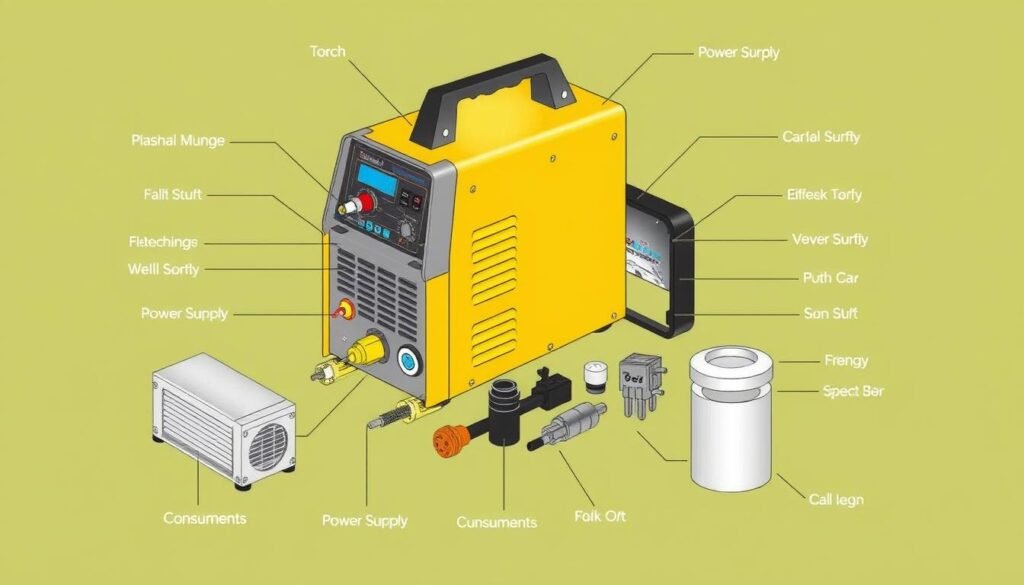
The plasma cutting system consists of several essential components, including the power source, torch, electrode, nozzle, and consumable parts. Each of these components plays a crucial role in the cutting process.
The Step-by-Step Cutting Process
The cutting process begins with compressed gas being blown through a focused nozzle at high speed toward the workpiece. An electrical arc is then formed within the gas between an electrode near or integrated into the gas nozzle and the workpiece itself.
Arc Starting Methods
Plasma cutters use various methods to start the arc, including contact starting, high voltage/high frequency circuits, and capacitive discharge. Understanding these methods is crucial for effective plasma cutting.
As you gain a comprehensive understanding of how plasma cutters function, you’ll appreciate the importance of proper grounding and the role of different gases in plasma cutting. The consumable parts will wear during the cutting process and need to be replaced for optimal performance.
Advantages and Disadvantages of Plasma Cutting
Benefits of Using Plasma Cutting
Plasma cutting provides accurate cuts and a cleaner edge compared to traditional methods. It’s effective for cutting various metals, both thin and thick, and is particularly useful for complex shapes and curves.
Limitations and Drawbacks
Despite its advantages, plasma cutting has limitations, including kerf width considerations and edge quality that may not match laser cutting. Consumable replacement costs are another factor to consider.
Plasma Cutting vs. Other Cutting Methods
Plasma cutting is a versatile technique used in various metal fabrication processes. To help you make informed decisions, we’ll compare plasma cutting with other major cutting methods.
Precision and Speed: Plasma Cutting vs. Laser Cutting
For thinner materials, laser cutting is often preferred over plasma cutting due to its superior hole-cutting abilities and precision. However, plasma cutting remains competitive for thicker materials and offers faster cutting speeds in certain applications.
Traditional vs. Modern: Plasma Cutting vs. Oxy-Fuel Cutting
Plasma cutting has several advantages over traditional oxy-fuel cutting, including higher precision, faster cutting speeds, and the ability to cut a wider range of materials. While oxy-fuel cutting is still used for certain applications, plasma cutting is generally more versatile.
Edge Quality and Environmental Considerations: Plasma Cutting vs. Water Jet Cutting
Water jet cutting offers excellent edge quality and is suitable for materials that are sensitive to heat. However, it can be slower than plasma cutting and may require additional processing steps. Plasma cutting, on the other hand, provides a cleaner edge than oxy-fuel cutting and is generally faster.
By understanding the strengths and weaknesses of each cutting method, you can choose the best technology for your specific needs, balancing factors like speed, precision, cost, and material capabilities.
Applications and Industries Using Plasma Cutting
You can find plasma cutting being utilized in a diverse range of applications, from industrial manufacturing to artistic creations. This versatility is a testament to the technology’s flexibility and efficiency.
Industrial Applications
Plasma cutting is widely used in fabrication shops and industrial construction for cutting structural steel components. Its high speed and precision make it ideal for large-scale CNC applications, allowing for the production of complex parts with ease.
Automotive and Repair Uses
The automotive industry relies on plasma cutting for both manufacturing and repair applications. From body work to custom modifications, plasma cutting provides the precision needed for intricate cuts and designs.
Artistic and Decorative Applications
Artists and craftspeople have embraced plasma cutting for creating decorative metalwork, including signage, furniture, and sculptural pieces. The ability to precision-cut complex shapes has opened up new creative possibilities in metal fabrication.
With its wide range of applications, plasma cutting has democratized metal fabrication, making it accessible to small businesses and hobbyists. Both air plasma and high-definition plasma systems are used across different industries based on precision and production requirements.
Conclusion
The world of plasma cutting offers a wealth of possibilities for professionals and hobbyists alike. With modern plasma torches becoming more affordable and portable, you can now leverage this technology for precise metal cutting.