Did you know that nearly 80% of manufactured parts require some form of surface treatment to protect against corrosion and wear? One effective method is conversion coating, a process that transforms metal surfaces into protective layers through chemical reactions. This technology is crucial in various industries, including aerospace, automotive, and defense, where metal protection is paramount.
By creating a thin, adhering coating of an insoluble compound, conversion coating provides a barrier against environmental damage, improving the durability and performance of metal components. Understanding this process is essential for engineers, manufacturers, and maintenance professionals seeking to protect metal parts in demanding environments.
What Is Chemical Conversion Coating?
Chemical conversion coating is a technique used to enhance the corrosion resistance of metals. The process involves a series of steps including cleaning, etching, deoxidizing, and finally applying the conversion coating. This results in a chemical reaction with the metal surface, forming a new compound layer that protects the base metal.
The conversion coating process is designed to be self-limiting, stopping once the layer is thick enough to prevent further chemical interaction with the base metal.
The Science Behind Chemical Conversion Coatings
The science behind conversion coatings involves controlled oxidation-reduction reactions between the metal substrate and the chemical solution, resulting in an insoluble compound layer. For instance, in chromate conversion coatings on aluminum, hexavalent chromium is reduced to trivalent chromium, forming a complex oxide layer with the aluminum.
Modern conversion coating science has evolved to include more environmentally friendly alternatives that maintain protective qualities while reducing hazardous substances.
The Importance of Chemical Conversion Coating in Industry
With its unique properties, chemical conversion coating has become indispensable in modern industry, enhancing the durability of metal parts. You might be wondering why it’s so crucial. The answer lies in its ability to provide effective corrosion protection and improve the longevity of components across various sectors.
Corrosion Protection Applications
Chem film, a type of conversion coating, is widely used in aerospace and manufacturing industries for its corrosion-resistant properties on aluminum parts. This coating is particularly valuable in environments where metal components are exposed to harsh conditions, such as high temperatures and corrosive substances. By applying a chem film or other conversion coatings, you can significantly extend the lifespan of critical components.
Industries That Rely on Conversion Coatings
Various industries rely on conversion coatings for their products. The aerospace industry, for instance, applies conversion coatings to aircraft components, fasteners, and structural elements to meet stringent safety and longevity requirements. Similarly, the automotive manufacturing sector uses conversion coatings on both functional components and body panels, providing corrosion resistance while improving paint adhesion for aesthetic finishes. Other industries, such as military and defense, electronics, architectural and construction, and consumer goods manufacturing, also benefit from the protective properties of conversion coatings on their products, including aluminum extrusions and structural components.
How Chemical Conversion Coating Works
To understand how chemical conversion coating works, it’s essential to delve into its chemical reaction process. Chemical conversion coating is a sophisticated method used to enhance the durability of metal parts by creating a protective, corrosion-resistant layer without altering part dimensions.
The Chemical Reaction Process
The conversion coating layer forms through a precipitation process where insoluble compounds develop directly on the metal surface, creating a tightly adherent protective barrier. This process involves complex chemical reactions that result in the formation of a stable film on the metal surface.
The layer typically consists of complex metal oxides, hydroxides, and chromates (in chromate conversion coatings) or phosphates (in phosphate conversion coatings) that provide superior corrosion resistance. The chemical reaction process is crucial in determining the properties of the resulting coating.
Layer Formation and Protection Mechanism
The protective mechanism of the conversion coating works through multiple pathways: the layer serves as a physical barrier against moisture and contaminants, provides sacrificial protection, and contains inhibitive components that actively suppress corrosion reactions. In chromate conversion coatings, the chromate ions have “self-healing” properties, meaning they can migrate to damaged areas and form new protective compounds if the coating is scratched or abraded.
The conversion coating layer is typically very thin (0.00001″ to 0.00003″ or 0.25-0.75 μm), ensuring that part dimensions and tolerances remain virtually unchanged after treatment. The layer’s microstructure often features a network of micro-cracks that actually enhance performance by allowing the coating to flex with the substrate without delaminating while still maintaining protective properties.
The Chemical Conversion Coating Process
The chemical conversion coating process is a critical step in enhancing the durability and corrosion resistance of metal surfaces. This process involves several key steps, starting with thorough surface preparation, followed by the application of the conversion coating using various techniques.
Surface Preparation Steps
Before applying a chemical conversion coating, the metal surface must be properly prepared. This involves a series of steps including cleaning, etching, and deoxidizing. The surface must be free from contaminants, such as dirt, oil, or grease, to ensure a strong bond between the metal and the coating. Etching and deoxidizing help to create a uniform surface that is receptive to the conversion coating. For instance, aluminum surfaces are typically cleaned and etched to remove any oxide layers, ensuring a strong bond with the chem film coating.
Application Methods and Techniques
Chemical conversion coatings can be applied using several methods, each with its own advantages. Immersion, or dipping, is the most common method for high-volume processing and complex geometries. This method involves suspending the parts in the conversion solution for a specified time, typically between 1 to 5 minutes. Spray application is used for large parts or when only specific areas require treatment, offering good control over solution application and reducing chemical consumption. Brush application provides a manual option for touch-up work, field repairs, or treating specific areas of large assemblies.
The choice of application method depends on the specific requirements of the part, including its size, complexity, and the desired properties of the coating. Temperature control is essential during application, with most conversion coating processes operating within specific temperature ranges to ensure proper chemical reactions. After application, parts undergo a thorough rinsing process, followed by controlled drying to prevent water spotting and ensure a high-quality finish.
Types of Chemical Conversion Coatings
You can choose from a range of chemical conversion coatings, each designed for specific metal substrates and applications. The diversity in these coatings allows industries to select the most appropriate type for their needs, ensuring optimal performance and protection.
Chromate Conversion Coatings
Chromate conversion coatings are widely used for aluminum and steel substrates. They provide excellent corrosion resistance and are often used in aerospace and defense applications. The chromate conversion process involves the reaction of the metal surface with a chromate solution, resulting in a protective layer.
Phosphate Conversion Coatings
Phosphate conversion coatings are commonly applied to steel surfaces. They offer good corrosion resistance and are used in various industries, including automotive and construction. The phosphate coating process involves the formation of a phosphate layer on the metal surface, which provides a good base for painting.
Newer Non-Chromate Alternatives
With the increasing environmental concerns associated with chromate coatings, newer non-chromate alternatives have been developed. These include molybdate, zirconate, and titanate-based coatings, which offer comparable performance without the toxicity concerns. Molybdate conversion coatings, for instance, provide excellent corrosion protection for zinc and zinc alloy surfaces.
Specialized Conversion Coatings
Beyond the common chromate and phosphate systems, numerous specialized conversion coatings have been developed for specific metals and applications. For example, stannate conversion coatings are used for magnesium alloys, while black oxide coatings are applied to steel for aesthetic and functional purposes. Vanadium-based conversion coatings are another example, used where electrical conductivity is crucial.
The variety of chemical conversion coatings available allows for tailored solutions to meet the unique requirements of different industries and applications. By understanding the characteristics and benefits of each type, you can make informed decisions for your specific needs.
Conversion Coatings for Different Metal Substrates
Conversion coatings are not one-size-fits-all solutions; they vary significantly across different metal substrates. The type of metal being treated dictates the conversion coating process to achieve optimal performance.
Aluminum Conversion Coating (Chem Film/Alodine)
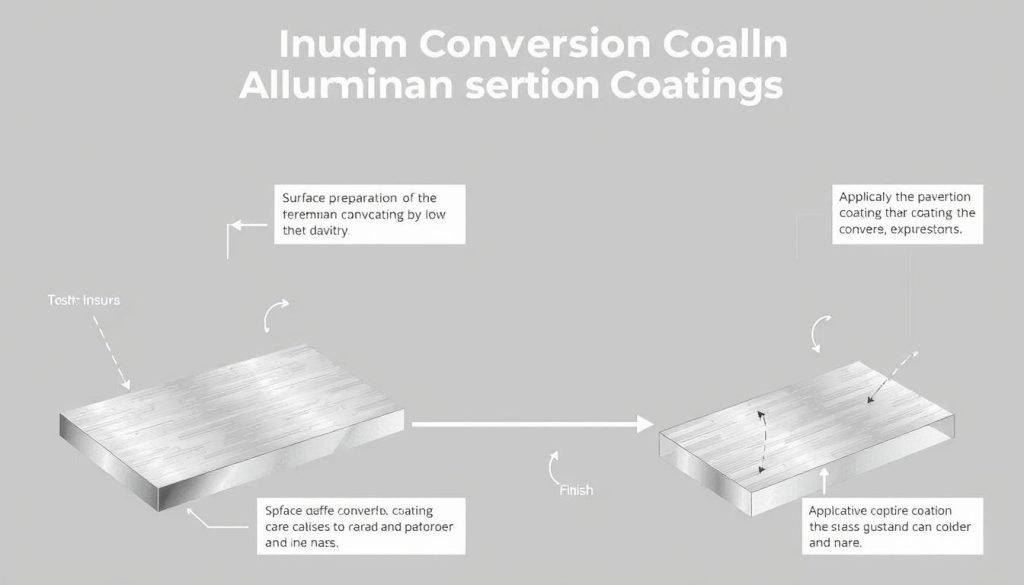
Aluminum conversion coatings, commonly known as Chem Film or Alodine, are used to enhance corrosion resistance and paint adhesion on aluminum surfaces. The process involves a chemical reaction that converts the aluminum surface into a protective layer. This layer not only protects the metal from corrosion but also provides a suitable base for subsequent painting or coating.
The Chem Film/Alodine process is widely used in aerospace and defense industries for its effectiveness in protecting aluminum alloys.
Steel and Stainless Steel Conversion Coatings
Steel and stainless steel substrates utilize different conversion coating chemistries compared to aluminum. For carbon and low-alloy steels, phosphate conversion coatings are the most common treatment. Zinc phosphate coatings create a crystalline structure that offers excellent corrosion protection and serves as an ideal base for paint, powder coating, or e-coat systems in automotive and industrial applications.
Manganese phosphate coatings are preferred for steel components subject to wear and friction, providing good lubricity, oil retention, and break-in properties. Stainless steel, due to its inherent corrosion resistance, requires specialized conversion coating formulations that can penetrate and convert its passive oxide layer.
Chromate conversion coatings can be applied to stainless steel, but specialized formulations are needed for good adhesion and protection. Oxalate conversion coatings represent a specialized treatment that improves paint adhesion while maintaining corrosion resistance.
Factors Affecting the Performance of Chemical Conversion Coatings
The effectiveness of chemical conversion coatings is influenced by several key factors. Understanding these factors is crucial for optimizing the coating process and achieving the desired level of protection.
Metal Substrate Composition and Preparation
The composition and preparation of the metal substrate play a significant role in determining the performance of the conversion coating. Different metals and alloys respond differently to the coating process, and surface preparation steps such as cleaning and etching can significantly impact the final result. For instance, the presence of impurities or surface contaminants can compromise the integrity of the coating.
Process Parameters and Control
Process parameters such as solution temperature, concentration, and treatment time must be carefully controlled to achieve optimal coating performance. Variations in these parameters can affect the thickness and uniformity of the coating, ultimately impacting its protective capabilities. Additionally, the type of conversion coating process used, such as hexavalent chromium or non-hexavalent chromium alternatives, can also influence the coating’s performance.
Environmental Conditions
Environmental conditions, including ambient humidity, temperature fluctuations, and air quality, can significantly impact the performance of the conversion coating. High humidity or temperature fluctuations can cause water spotting or incomplete drying, compromising the coating’s integrity. Furthermore, long-term exposure to environmental stressors such as UV radiation, salt spray, and temperature cycling can ultimately determine the coating’s performance in service.
Benefits and Advantages of Chemical Conversion Coating
One of the key advantages of using chemical conversion coating is its ability to provide enhanced protection and efficiency.
Enhanced Corrosion Resistance
Chemical conversion coating provides a robust layer of protection against corrosion, enhancing the durability of metal parts. By creating a stable, inert layer on the metal surface, it prevents corrosion from occurring, thus extending the lifespan of the components. This is particularly crucial in industries where metal parts are exposed to harsh environments.
Improved Paint Adhesion
The conversion coating process not only protects against corrosion but also improves paint adhesion. The treated surface provides a better bonding site for paints and coatings, ensuring a more uniform and durable finish. This results in a higher quality appearance and longer-lasting protection for the metal substrate.
Cost-Effectiveness and Efficiency
Chemical conversion coating is a cost-effective and efficient process. It offers several practical benefits, including quick and easy application methods, fewer process steps compared to other finishing techniques, and minimal material consumption due to its thin coating nature. The process can be applied through immersion, spray, or brush, making it versatile for various part geometries and production volumes. Additionally, the ambient operating temperatures and the ability to treat multiple parts simultaneously enhance process efficiency and reduce energy consumption.
Limitations and Environmental Considerations
Chemical conversion coating, despite its advantages, poses several challenges, including environmental and health risks. The most significant limitation of traditional chromate conversion coatings is the environmental and health concerns associated with hexavalent chromium, a known carcinogen subject to strict regulations worldwide.
The processes involving hexavalent chromium require extensive engineering controls and wastewater treatment systems, increasing operational costs. Non-chromate alternatives, while improving, still fall short in corrosion protection and self-healing capabilities. Conversion coatings provide limited protection in severe environments and are susceptible to mechanical damage. Process control is demanding, and effectiveness varies with different metal alloys. Waste treatment costs continue to rise with tightening regulations, creating uncertainty for manufacturers regarding future compliance.
Conclusion
With its numerous benefits and applications, chemical conversion coating remains a crucial process in modern manufacturing. This surface treatment technology transforms metal surfaces into protective layers, creating a barrier against environmental damage and enhancing performance characteristics.
Chemical conversion coating provides corrosion protection, improves paint adhesion, and controls electrical conductivity. As the technology continues to evolve, more environmentally friendly alternatives are being developed, maintaining protective qualities while reducing hazardous substances.
Understanding your application’s specific requirements is essential for selecting the optimal conversion coating system. For critical industries like aerospace, defense, and automotive, conversion coatings provide a proven foundation for comprehensive protection systems. By working with experienced applicators and staying informed about compliant coating options, manufacturers can ensure component reliability, longevity, and environmental responsibility.