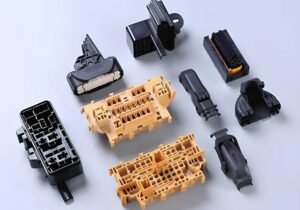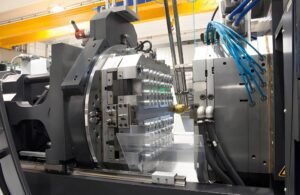

Machining is one of the most reliable ways to turn raw materials into functional parts. Machining is the backbone of modern manufacturing, from automotive brackets and medical housings to aerospace fittings and consumer electronics components. But when a project starts, a big question arises: Should you use CNC machining or conventional machining?
Both remove material from a workpiece to create a final shape. But they differ in how the cutting tools are controlled, what kind of parts they are best for and the cost structure behind them. This article explains the comparison of CNC machining vs conventional machining so you can choose the right one for your design, tolerance, volume and budget.
What Are the Two Machining Methods?
The manufacturing world has two ways to shape materials: computer numerical control (CNC) and conventional machining. Each serves a specific production need with unique advantages.
What is CNC Machining?
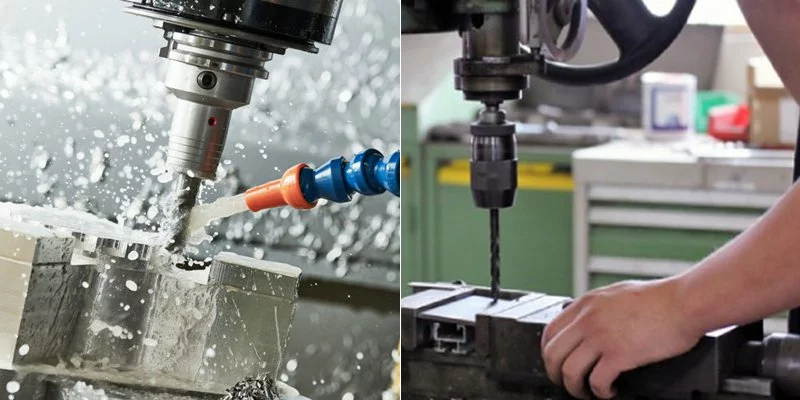
CNC machining uses computerized controls to remove material layers from stock pieces to create custom designed parts. It starts with designers using Computer-Aided Design (CAD) software to create 3D models. Then a programmer translates these models into G-code instructions that guide the CNC machine. Once programmed the machine clamps raw material and uses computer controlled motors to move cutting tools along precise paths to gradually turn the workpiece into the final product with intricate details and exact dimensions.
Advantages:
- Very high precision and repeatability.
- Produces complex parts easily with multi-axis control.
- Safer operation due to enclosed, automated systems.
- Runs continuously with minimal supervision, ideal for high output.
Disadvantages:
- Expensive upfront cost and higher maintenance needs.
- Requires skilled programming.
- Less cost-effective for small batches because setup/program time is high.

What is Conventional Machining?
Conventional machining involves shaping materials with manually operated tools like mills, grinders, lathes and drill presses. In this traditional approach, machinists select the right cutting tools based on the desired outcome and material properties. They clamp workpieces in vises or fixtures and manually control the machine through levers and handles. Throughout the process operators rely on their experience to determine cutting speed, feed rate and depth and continually observe and adjust to achieve the intended shape.
Advantages:
- Lower equipment cost, good for small shops and startups.
- Flexible for prototypes and small batches.
- Operators can adjust instantly without reprogramming.
Disadvantages:
- More human error and less consistent quality.
- Slower production since everything is manual.
- Difficult to make highly complex or intricate geometries.

Core Difference: Automation vs Manual Control
The main difference between CNC and conventional machines lies in their control mechanisms. CNC machining uses pre-programmed computer instructions with accuracy of 0.0002 to 0.0005 inches while conventional machining relies entirely on the operator’s skill and experience. CNC systems can run continuously with minimal intervention and are ideal for high volume production. Conventional methods are best for flexibility and can make adjustments during the machining process.
CNC Machining vs Conventional Machining: Key Comparison Factors
When evaluating machining methods, several key factors determine which one is best for your manufacturing needs. Understanding these differences helps you make informed decisions about your production needs.
1) Precision and Part Complexity
CNC machining is precise because it follows a computer program, with no human error or fatigue. It can hold tight tolerances, ±0.005 inches and in some cases 0.001 mm.
Conventional machining relies on the machinist’s skill, making precision and repeatability less consistent. Producing complex parts manually is harder especially when multiple setups or intricate toolpaths are required. CNC machines with multi-axis and automated toolpaths can handle complex geometries easily.
2) Material Capability
CNC machines can cut many materials with advanced tooling like carbide and diamond-coated cutters and processes like EDM and waterjet cutting. They are good for titanium, stainless steel, Inconel, ceramics, PEEK, carbon-fiber composites.
Conventional machining is limited, best for softer metals like aluminum, mild steel, brass, tin, lead which don’t exceed traditional tool hardness limits.
3) Production Volume and Efficiency
CNC machining is good for medium to high volume production because it runs unattended and produces identical parts with consistent quality. Automated tool changes and optimized programs make it possible for one operator to run multiple machines.
Conventional machining requires full manual control, slows down production and reduces consistency. It’s better for prototypes, repairs, small batch production not for high volume.
4) Cost-Effectiveness
CNC machining has high upfront cost for machines, software and programming. For small batches, this investment may not give immediate returns. But for high volume production, CNC becomes more cost effective with lower scrap rates, fewer errors, less labor and consistent repeatability.
Conventional machining is cheaper to start with but labor cost increases quickly for high volume work since each part requires hands-on control. It’s more economical for low volume or custom jobs but not for mass production.
5) Skill Requirements
CNC machining requires technical skills like G-code, CAD/CAM programming, tool selection and precise machine setup. Although the knowledge level is high, the machine handles the physical accuracy, less reliance on manual hand skills.
Conventional machining demands strong hands-on ability, manual precision and a feel for cutting forces. Results depend heavily on operator experience and training conventional machinists takes more time and practice.
6) Safety and Error Rates
CNC machines are safer because they are enclosed, automated tool changes and built-in error detection. Operators have little direct contact with moving tools, less injury and less mistakes.
Conventional machining puts the operator near rotating cutters and flying chips, more risk of accidents. Manual control also increases the chance of errors due to fatigue, misjudgment or physical limitations.
Comparison Table
| Comparison Factor | CNC Machining | Conventional Machining |
| Precision | 0.0002 to 0.0005 inches | Operator-dependent, less precise |
| Initial Cost | High (3-5x more expensive) | Lower initial investment |
| Operating Cost | Lower per unit at high volumes | Higher labor costs |
| Production Speed | Can operate 24/7, automated | Slower, requires constant operator attention |
| Production Volume | Ideal for high-volume production | Best for small batches and one-off items |
| Operator Requirements | CAD/CAM programming, G-code knowledge, mathematics skills | Manual dexterity, coordination, intuitive understanding |
| Safety Features | Enclosed systems, automatic shut-off mechanisms | Higher risk, direct tool exposure |
| Material Compatibility | Handles hard alloys (Titanium, Inconel, Stainless Steel 304/303) | Best with softer, more forgiving materials |
| Complexity Capability | Up to 6 processing axes, complex geometries possible | Limited to simpler geometries |
| Flexibility | Requires reprogramming for changes | Immediate adjustments possible |
| Error Rate | Minimal errors, consistent output | Subject to human error and fatigue |
| Supervision Needs | Minimal, one operator can manage multiple machines | Constant operator attention required |
When Should You Choose CNC Machining?
CNC is the best option when your project needs:
- Tight tolerances and precision
- Complex geometry.
- High repeatability
- Mid-to-high production volumes
- Shorter delivery for repeat orders
When Should You Choose Conventional Machining?
Manual machining still has real advantages, especially when:
- You need only 1–5 pieces
- You’re still refining a prototype
- Your design changes frequently
- The part is geometrically simple
Why Choose Fecision for CNC Machining?
Fecision is not just a machining company. We are a global specialist in rim and wheel manufacturing, with over 10 years of experience in the industry. Our CNC machining quality is trusted by international customers in various industries, including automotive, aerospace, medical and more.
Here’s why customers choose Fecision:
- We have over 10+ years of experience in custom CNC machining.
- Deep expertise in automotive, aerospace and medical industries.
- Powerful R&D team improving products and equipment every year.
- Flexible CNC customization for many models, sizes, and small batches.
- Stable factories ensure consistent output, fast delivery, and fine CNC finish.
Our CNC machining ensures every detail is sharp, precise and high quality.
Conclusion
When deciding between CNC machining and conventional machining, the answer depends on your project’s precision requirements, complexity, material and volume. CNC is for high precision, complex parts, hard materials and large volume production. Conventional machining is for simple parts, prototypes, quick changes and small batches.
If you’re not sure which method is for your application, share your drawing, material, tolerance range and target quantity. A machining expert can help you avoid unnecessary costs and choose the right process from the start.
Ready to Manufacture Your Custom Parts?
Fecision delivers precision CNC machining built directly from your drawings, whether you need prototypes, custom components, or scalable repeat production.
Send us your CAD/drawing file, material requirements, tolerance needs and target quantity. Our engineers will recommend the best manufacturing plan and help you move from design to dependable parts fast, accurately, and cost-effectively.