
Metal CNC machining is a modern manufacturing method that uses computer controlled machines to cut and shape metal with very high accuracy. These machines work automatically, which makes production faster, more consistent, and less prone to errors than manual machining.
CNC machining can create complex metal parts that are difficult or impossible to make by hand. It also reduces material waste and lowers production costs. Because of its precision and reliability, metal CNC machining is widely used in industries that need high quality and repeatable results.
This article explains what CNC machining is and how it works, enabling businesses to make informed decisions and stay competitive in a technology driven manufacturing environment.
What is Metal CNC Machining?
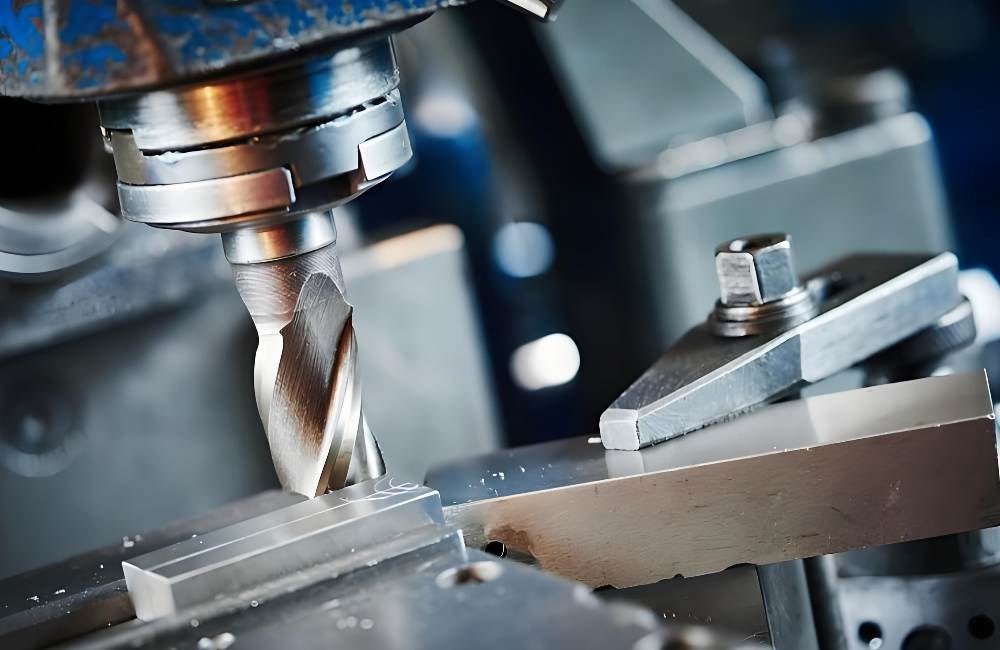
Computer Numerical Control (CNC) machining is a subtractive manufacturing process in which computerized systems direct machine tools to remove material from metal workpieces until the desired shapes emerge. This technology operates through pre programmed software that dictates the movement and operation of precision tools, including mills, lathes, routers, grinders, and lasers.
At its core, metal CNC machining transforms digital designs into physical products through automated control. The process begins with Computer Aided Design (CAD) models that are converted into G code and M code specialized instructions that guide the machinery. These codes control cutting paths, speeds, depths, and tool changes with remarkable precision. Moreover, the machine interprets these instructions to execute complex three dimensional cutting tasks in a single set of prompts.
Difference between Manual Machining and CNC Automation
Manual machining depends completely on the skills of a machinist. The operator manually adjusts the machine, measures everything, and controls the movement of the cutting tools. Because of this, accuracy can vary, setup takes longer, and the chance of human error increases.
CNC machining works differently. The machine follows a computer program that controls every movement. It can achieve precise accuracy in minutes and repeat the same job as many times as needed with identical results. CNC automation reduces manual labor, improves consistency, and makes it easier to meet tight quality standards.
How Metal CNC Machining Works
The process of metal CNC machining follows a pretty straightforward workflow that turns digital designs into precise, manufactured components. This multi stage procedure is designed to ensure consistent quality and dimensional accuracy throughout production.
Step 1: CAD design and digital modeling
The first step is to create a detailed 3D model in CAD software like SolidWorks, AutoCAD or Fusion 360. Engineers will define dimensions, tolerances and geometric features, and consider things like material behavior and how cutting tools will be able to access the part. This digital blueprint guides all the later machining steps.
Step 2: CAM programming and toolpath generation
The CAD model gets imported into CAM software, where engineers generate toolpaths that decide the movement of the cutting tool. These toolpaths ensure smooth cuts, precise tolerances and smooth surfaces. CAM programming also defines feed rates, cutting speeds and tool sequences, shaping the whole CNC machining process.
Step 3: Machine setup and calibration
Before it starts machining, technicians will set up the machine by attaching the workpiece, installing the right tools and setting reference points. They will verify that everything is aligned and accurate using tools like dial indicators and micrometers. Complete calibration is usually done every three to six months to ensure the machine is in top working order.
Step 4: Execution and real time monitoring
After setup, the CNC machine starts running the programmed instructions automatically. During this stage, advanced monitoring systems track spindle loads, tool conditions, feed rates and emergency stop signals. Real-time monitoring ensures the machine is running smoothly and identifies any issues early, preventing defects and maintaining high quality output.
Step 5: Post processing and finishing
Post processing software adjusts the toolpaths to match the specific CNC machine being used. Once machining is done, the part goes through inspection, cleaning, deburring and surface finishing. These steps make sure the part meets all the dimensional and quality requirements before it’s delivered.
Fecision incorporates advanced QC equipment and automated processes to guarantee consistency across prototypes and production runs. This commitment to precision helps deliver reliable components every time.
Key Benefits of CNC Machining for Metal Parts
CNC machining offers a lot of advantages that go far beyond basic metal fabrication. This is why companies across different industries trust CNC technology to produce reliable, high quality parts.
1) High precision and tight tolerances
CNC machines can create metal parts with extremely high accuracy. They follow computer programs that guide every movement of the cutting tool, so they can produce detailed shapes and smooth finishes. This level of precision ensures that parts fit together perfectly and work exactly as intended.
2) Repeatability and consistency
CNC machines just repeat the same job as many times as you need with identical results. They follow a computer program, so their accuracy is consistent every time.
Once a CNC machine is programmed, it can produce the same part repeatedly with the same level of accuracy. This consistency is especially important when you are making large batches or when parts have to meet really strict quality standards. One thing about manual machining that you don’t get with CNC is the reduction of human error.
3) Faster Production and Reduced Downtime
Metal CNC machining runs day and night with minimal supervision. The automation lets manufacturers operate around the clock, eliminating the breaks you typically need with manual operations. In contrast to traditional methods, CNC machines can quickly switch between different operations without needing to be retooled. This means you get faster production cycles and quicker delivery times.
4) Lower Material Waste and Cost Savings
The precision of CNC machining makes it so that you waste less material through optimized cutting paths. Advanced simulation programs determine the optimal machining techniques before you even start cutting, further reducing waste. Not to mention material efficiency, CNC manufacturing requires less labor than manual methods, which reduces overall production costs.
5) Improved Safety and Automation
CNC machining keeps workers safer because most of the cutting and shaping happens inside the machine. Operators aren’t near the cutting tools, which reduces the risk of injury. Their job mainly involves setting up the machine and checking the final parts, which makes the whole process a lot safer and more efficient.
Metals for CNC Machining: Choosing the Right Material
Choosing the right metal is one of the most important steps in any CNC machining project. The material you pick affects the cost, strength, durability, and overall performance of the final part.
- Aluminum Alloys: Aluminum is highly popular in CNC machining because it’s lightweight, corrosion-resistant, and highly machinable. It offers great dimensional stability and is ideal for components in aerospace, automotive, and consumer electronics.
- Stainless Steel: Stainless steel provides exceptional strength, heat resistance, and corrosion protection. It is commonly used for medical instruments, food processing equipment, and industrial components. While more challenging to machine than aluminum, it offers superior durability.
- Carbon Steel: Carbon steel is a cost effective option for structural components and mechanical parts. It’s tough and versatile, making it a popular choice across automotive, construction, and industrial machinery applications.
- Copper & Brass: Copper and brass combine excellent conductivity with high machinability. They are preferred materials for electrical components, connectors, and precision instruments.
- Titanium: Titanium stands out for its strength-to-weight ratio and biocompatibility. Although it can be difficult to work with due to its hardness, it’s vital for use in aerospace, defense, and medical implants.
Special Considerations for Large Parts
When you’re producing metals for large CNC machined parts, you need to consider material stability, internal stress relief, and specialized fixturing. Larger parts tend to warp or expand during machining, making dimensional control even more critical. Fecision’s expertise in handling large components means we can guarantee consistent accuracy even for oversized and heavy duty metal parts.
Why Precision CNC Metal Machining Matters
In industries where accuracy is crucial, even tiny errors can cause big problems. Precision CNC machining makes sure that every part is manufactured exactly as designed, down to the most precise measurements.
This high accuracy is especially important in fields like aerospace, defense, and medical devices. In these industries:
- A minor error in an airplane part can be a significant safety issue.
- Military equipment needs to perform perfectly under tough conditions.
- Medical implants need to fit exactly to avoid complications.
Precision machining also helps businesses save money by reducing waste, preventing rework, and improving product quality. Businesses that consistently deliver high precision parts get a significant competitive advantage and earn the trust of major industries.
In short, precision metal CNC machining is essential because it ensures safety, performance, reliability, and efficiency. As expectations in manufacturing continue to rise, companies that excel in precision machining stay ahead in the market.
Applications of CNC Machining Metal Parts
CNC machining is widely used across many industries because it offers high precision and reliability.
Aerospace manufacturers rely on CNC machining for the manufacture of turbine blades, landing gear, and structural parts. Automotive companies use it for engine blocks, gears, and brake components. The medical field requires it for implants, surgical instruments, and MRI components.
Electronics manufacturers depend on CNC machining for circuit boards, heat sinks, and enclosures. Defence applications include weapon components and communication equipment. Other industries include energy, marine, robotics, construction, and jewellery.

Large Scale and High Volume CNC Metal Machining
High volume CNC metal machining allows manufacturers to produce large numbers of metal parts with the same high quality every time. It is ideal for making thousands of identical components with reliable accuracy.
Modern CNC machines use advanced multi axis systems that can operate continuously with minimal human intervention. Automation lowers labor costs and increases productivity. In fact, fully automated CNC machines can do the work of several operators, and even more when combined with robotic loading systems.
These machines deliver excellent precision, maintaining tight tolerances even during long production runs. This ensures consistent part quality from the first piece to the last.
High volume production is also cost effective. Setup costs are spread across more parts, which lowers the cost per unit. Faster machining speeds also help reduce production time and shorten lead times.
Large scale CNC metal machining is used in many industries, including medical devices, industrial equipment, energy systems, and transportation.
For high volume or large scale metal machining projects, partner with Fecision.
Why Fecision for CNC Metal Machining
Fecision is a trusted CNC machining manufacturer with over 25 years of experience in the industry.
- Founded in 2013 and ISO 9001 certified.
- Specializes in high precision machining with tolerances up to ±0.01 mm
- Runs over 200 CNC machines operating 24/7 for strong production capacity
- Offers full in house services: R&D, metal forming, machining, and surface treatment
- Uses advanced inspection tools like 3D CMM to ensure quality
- Capable of 3 axis to 5 axis milling for simple to highly complex parts
Their philosophy is simple: “You give us the drawing, we provide the solution.”
Fecision selects the most suitable machining method, considering material, design complexity, budget, and application, to deliver cost effective, high quality parts.
Conclusion
Metal CNC machining plays an important role in modern manufacturing. It offers high accuracy, fast production, and consistent results. CNC machining is widely used because it can work with many metal materials and produce precise parts in large quantities, from aerospace parts to automotive components.
If you need high precision metal machining or custom CNC parts, Fecision can support your project from start to finish. Contact Fecision today to get started.