UHMW, a material renowned for its unparalleled toughness and versatility, is transforming industries from medical to manufacturing. While its exceptional properties offer significant advantages, the question whether it can be injection molded is something that needs to be figured out.
So, let’s learn about it and understand UHMW injection molding, its applications, and the associated challenges.
Understanding UHMW (Ultra-High Molecular Weight Polyethylene)
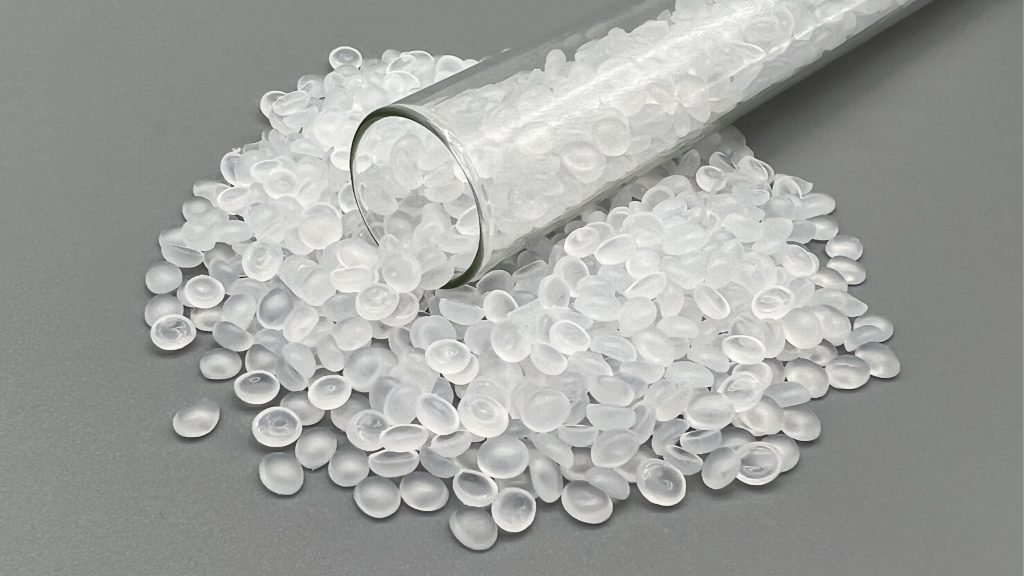
UHMW (ultra-high molecular weight polyethylene) is an extremely tough, quality-engineered plastic. Think of it as a superstrong version of regular polythene. Its exceptional durability and versatility make it ideal for industrial applications that demand high resistance to wear and chemicals and low friction.
Some of the key uses of UHMW include aerospace components, mining equipment, medical devices, packaging machinery, and rail systems, where its resilience and performance are crucial.
Properties of UHMW
UHMW has some of the most exceptional physical and mechanical properties, including high molecular weight, low friction, impact, and wear resistance. Let’s see how these properties translate into practical advantages in various applications.
- High Molecular Weight
UHMW is characterized by its high molecular weight of 3.1 million g/mole and a degree of polymerization of approximately 110,000. This weight shows significantly longer molecular chains, which results in stronger intermolecular interactions. A high molecular weight provides superior resistance to deformation and fracture under applied stress.
- Excellent Wear Resistance
Research indicates that UHMW has an average wear rate of 15.2–19.85 mm³ per million cycles. It is a quantifiable measure of how much material is lost during repetitive friction. This wear rate shows UHMW’s inherent resistance to abrasion. It signifies that the material can withstand prolonged, repetitive contact with other surfaces without much degradation.
- Low Friction and Self-lubricating Nature
UHMW exhibits a notable low coefficient of friction, averaging around 0.1. Low friction makes it highly suitable for products like chain channels, wear strips, belt scrapers, guides, and rollers. Notably, it is also a self-lubricating material and doesn’t require external lubricants in frictional environments.
- Chemical And Impact Resistance
Ultra-high molecular weight polyethylene’s impact strength (23 KJ/m²) surpasses most thermoplastics with exceptional durability. Also, UHMW polyethylene offers excellent resistance when it comes to chemicals. They resist degradation from water, seawater, and moisture, avoiding swelling or hydrolysis.
Can UHMW be Injection Molded?
Yes, UHMW injection molding is possible, though it requires specialized processes and materials and is not as common as injection molding other plastics. Here are some key considerations to ensure during the injection molding process, which will optimize material flow, minimize degradation, and produce high-quality, durable parts.
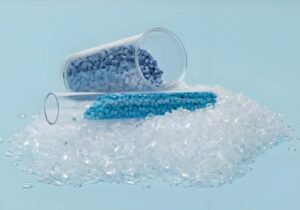
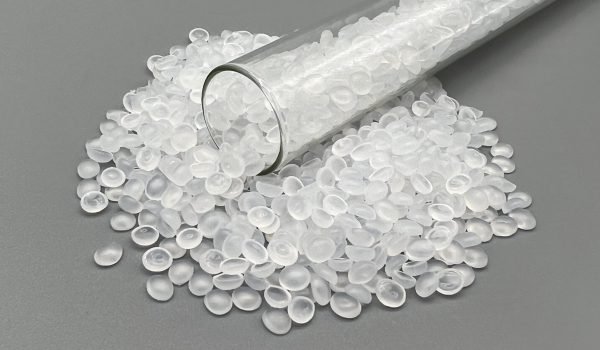
- Preparing UHMW Pellets: This is the critical first step. Use pre-compacted, fine-particle-free pellets for consistent material flow into the mold. It will prevent blockages and ensure uniform part formation.
- Setting Optimal Temperature: Due to UHMW’s high molecular weight, precise temperature (200°C–300°C) and pressure control are essential to avoid defects during injection molding and achieve proper melt flow.
- Barrel Temperature and Die Settings: Maintain a barrel temperature between 260°C and 316°C to avoid material degradation and clogging and ensure a consistent material flow.
- Injection Pressure and Cycle Time: Correct injection pressure is critical during UHMW molding. Adjust the cycle time (60–120 seconds) based on part size and complexity.
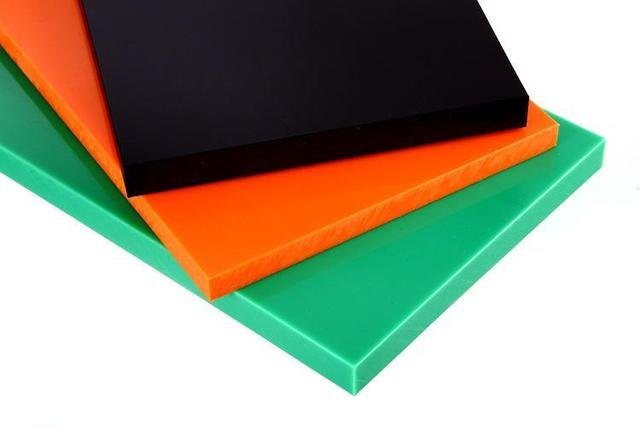
Challenges of Injection Molding UHMW
While UHMW injection molding is possible, it comes with its own set of challenges. A thorough understanding will help you to optimize the injection molding process and achieve the desired results.
- High Viscosity
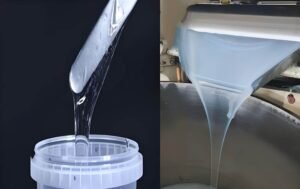
UHMWPE’s inherent high melt viscosity can cause flow limitations during injection molding. This characteristic can restrict the material’s ability to fully and accurately fill complex mold cavities.
- Low Thermal Conductivity
The low thermal conductivity of this polymer demands precise cooling control to prevent warping or shrinkage. Accurate temperature management is essential for dimensional stability.
- Mold Design Considerations
Strategic placement of gates and runners, along with appropriate ventilation, is critical in mold design. This optimizes material flow and minimizes defects caused by trapped gases, reducing cycle times.
Alternative Processing Methods for UHMW
Beyond injection molding, alternative UHMW processing methods offer viable options. Compression molding, ram extrusion, and sintering are commonly used, providing effective ways to shape UHMW into desired forms.
1.Compression Molding
Compression molding is a process in which heated UHMW is placed into a hot, open mold. The mold is then pressed closed, forcing the material to fill all parts with the mold. This method makes parts of different sizes and shapes, like elevator bolts, skid shoes, and snowmobile skis.
The parts manufactured by compression molding are extremely resistant to wear, impact, and corrosion and can handle cold and high temperatures.
2.Ram Extrusion
Ram extrusion is a UHMW molding technique where UHMWPE powder is fed into a heated cylindrical pipe. A ram compresses and moves the powder through the pipe, sintering it into a continuous shape. This process creates extrudates with constant cross-sections, like rods, tubes, and profiles.
3.Sintering Process
Sintering is a heat-based process where powdered UHMW materials are fused into a solid mass without fully melting them. The powder is heated to a temperature below its melting point, causing the particles to bond together through diffusion and other mechanisms. This creates a strong, cohesive material ideal for producing durable, wear-resistant components.
Applications of Molded UHMW Parts
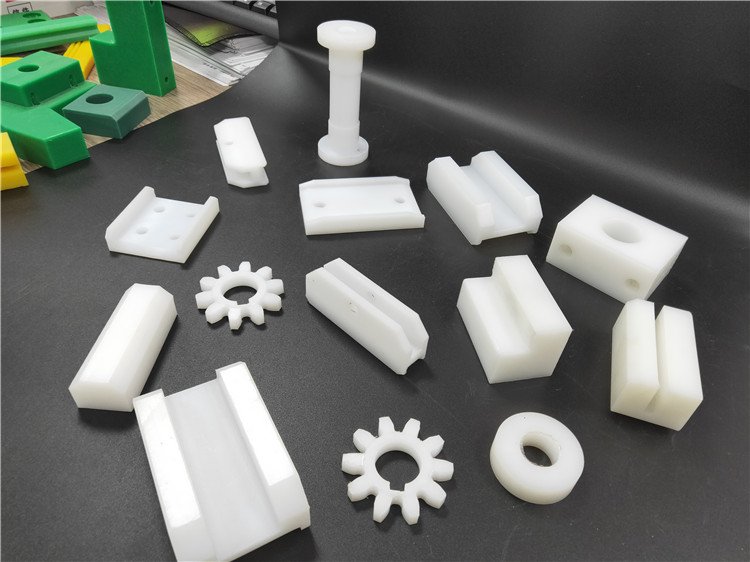
Mold UHMW parts are utilized across various industries, including industrial settings, medical devices, and food processing. Let’s discuss their applications:
- Industrial Machinery
UHMW excels in demanding industrial environments due to its high-performance characteristics. It’s commonly used as a liner for conveyor systems and machinery in manufacturing. In automotive applications, it replaces materials like POM and urethane for components such as assist straps, seat belt parts, and shock spacers. Additionally, its low smoke toxicity makes it suitable for aircraft interiors, enhancing passenger safety.
- Medical Devices
UHMW’s biocompatibility, shock, and wear resistance make it highly suitable for medical implants, especially in arthroplasty. It’s the preferred bearing material in the majority of hip and artificial joint replacements. This highlights its critical role in medical devices, where durability and compatibility with the human body are essential for long-term success.
- Food Processing
UHMW is widely used in food handling due to its compliance with FDA and USDA regulations. It can be found in everyday items like chopping boards, pasta rollers, rolling pins, and critical machinery components. Think of conveyor parts, scraper blades that keep lines clean, and guide rails that ensure smooth product movement.
Its chemical resistance ensures it withstands commercial cleaners, simplifying sanitation and preventing mold, bacteria, and virus growth. This makes it a reliable choice for food manufacturing and storage, where cleanliness is paramount.
UHMW: Your Solution for Demanding Applications
UHMW is a powerful material, which makes it indispensable across diverse industries. From the intricacies of medical implants to the rigorous demands of industrial machinery and the hygienic standards of food processing, UHMW consistently delivers.
While injection molding UHMW presents unique challenges, understanding and addressing these and exploring alternative processing methods like compression molding and ram extrusion can help you utilize its full potential.
The material’s inherent properties, blended with tailored processing, make UHMW a reliable solution for demanding applications.